

How to Choose the Right Video Doorbells
⚡ Quick Answer
A video doorbell is often the first line of defense you'll actually see footage from. Not because it solves everything—it doesn't—but because it sits at the entry point where most intrusions, package thefts, and unwanted visitors happen. I've reviewed security footage where a clear 1080p video of a package thief's face went unused because the homeowner never checked their app, or where a 4K doorbell caught the moment someone tried a locked door, then moved to a side window. What matters isn't the specs sheet. It's what you'll actually use, what your home's wiring and connectivity support, and whether the footage is clear enough to matter in a real situation.
Table of Contents
- Our Top Picks in Detail
- Wired vs. Battery: Pick the Right Power Source for Your Setup
- Resolution and Night Vision: Why 1080p May Be Enough
- Motion Detection and Smart Alerts: Cutting Through False Alarms
- Storage and Cloud vs. Local: Where Your Footage Actually Goes
- Integration and Ecosystem: Doorbell as Part of Your Larger System
- Real-World Installation: What Works in Your Home
- Frequently Asked Questions
In this guide, I'll walk you through the real trade-offs: wired vs. battery, resolution and night vision quality, motion detection accuracy, and the often-overlooked question of how footage gets stored. You'll know exactly what to look for before you buy, and you'll avoid the common pitfalls that leave homeowners frustrated and unprotected.
Our Top Picks in Detail
Affiliate disclosure: if you buy through these links, we may earn a commission at no extra cost to you.

All-new Blink Video Doorbell + Outdoor 4 – Wireless smart security cameras, head-to-toe HD view, two-year battery life. Sync Module Core included – 2 camera system + Video Doorbell
$129.99Check Price →This is the pick to look at first if you want a reliable, well-rounded option that handles everyday use without unnecessary compromises. All-new Blink Video Doorbell + Outdoor 4 – Wireless smart security cameras, head-to-toe HD view, two-year battery life. Sync Module Core included – 2 camera system + Video Doorbell delivers solid performance across the features that matter most in this category.
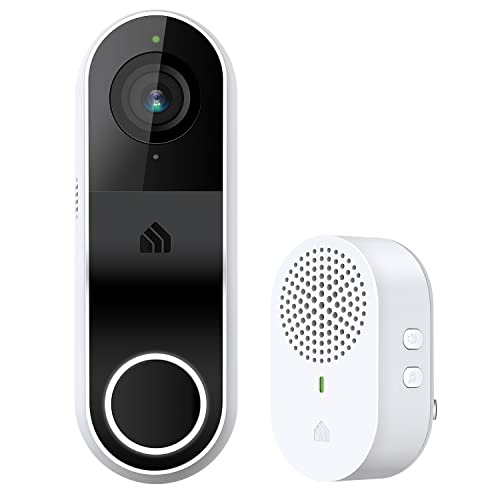
Kasa Smart Video Doorbell Camera Hardwired w\/Chime, 2K Resolution, Always-on Power, Night Vision, 2-Way Audio, Real-Time Notification, Cloud & SD Card Storage, Works w\/Alexa & Google Home (KD110)
$49.99Check Price →If the top pick doesn't quite fit your situation, Kasa Smart Video Doorbell Camera Hardwired w\/Chime, 2K Resolution, Always-on Power, Night Vision, 2-Way Audio, Real-Time Notification, Cloud & SD Card Storage, Works w\/Alexa & Google Home (KD110) is worth a close look as a capable alternative that still covers the essentials well.
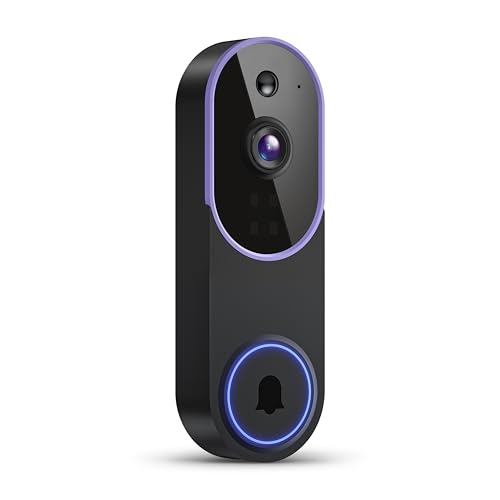
ElioVana 720P Smart Video Doorbell Camera with Motion Detection, Night Vision, Cloud Storage, Two-Way Talk, Battery Powered, Home or Business Security, 2.4GHz Wi-Fi(Excluding Receiver)
$15.99Check Price →For buyers who want the most for their money without sacrificing the features that actually matter, ElioVana 720P Smart Video Doorbell Camera with Motion Detection, Night Vision, Cloud Storage, Two-Way Talk, Battery Powered, Home or Business Security, 2.4GHz Wi-Fi(Excluding Receiver) is the practical choice at this price point.
Wired vs. Battery: Pick the Right Power Source for Your Setup
This is the first decision, and it shapes everything after. Wired doorbells connect to your existing 16-24V doorbell transformer—assuming you have one. Most homes built before 2010 do. Battery doorbells run on rechargeable batteries, usually good for 3-6 months depending on activity and temperature. Neither is inherently better. It's about your home's wiring and how hands-on you want to be.
Wired doorbells don't die. You never charge them. They run 24/7 without degradation. Night vision, processing power, motion detection—all run consistently. The catch: if your doorbell circuit is on the same breaker as something else, that device can fail and take your doorbell down. Also, if you live in a rental or want future flexibility, hardwiring isn't practical. Battery doorbells give you portability and zero installation fuss. Install it, forget it for months. But I've seen homeowners miss alerts because their battery died and they didn't notice—or worse, a package gets stolen because the camera wasn't recording for two weeks before the battery gave out.
New homeowners: if you have an existing doorbell, go wired. It's more reliable and you'll get better performance. Renters or someone who moves often: battery is the answer. If you're undecided about commitment, a battery unit buys you time to test placement and functionality before running wires.
Resolution and Night Vision: Why 1080p May Be Enough
You'll see marketing for 2K and 4K doorbells. Higher numbers sound better. The real question: can you actually identify a face, read a license plate, or confirm what someone is holding? That depends on distance, lighting, and lens field of view—not just megapixels.
1080p (1920×1080) is sufficient for most home security scenarios. A face at your doorstep 2-3 feet away will be clear enough to share with police or review later. 2K and 4K help if your doorbell captures a wider angle or you're zooming in on details. But more resolution also means larger files, faster cloud storage depletion, and more processing power—especially in night mode. I've reviewed 4K footage from a budget doorbell where night vision was so grainy that the resolution advantage evaporated in the dark. Spend your money on night vision quality, not megapixels.
Night vision matters more. Look for models with infrared (IR) LEDs or active night vision that use visible light intelligently. You want clear, readable footage in darkness, not just a grayscale blob. Test it in your actual porch lighting conditions—overcast night, streetlight, porch light on/off. Color night vision is increasingly common and worth the small price premium. It lets you see clothing colors, which helps describe suspects far better than black-and-white footage. A 1080p doorbell with excellent night vision will serve you better than 4K with poor low-light performance.
Motion Detection and Smart Alerts: Cutting Through False Alarms
A doorbell that alerts you to every leaf, car passing, and shadow is worthless. You'll ignore notifications within a week—and then miss the alert that matters. Motion detection tuning is where most cheap doorbells fail and where better models earn their cost.
Premium doorbells use AI-powered detection that distinguishes between a person, a package, a vehicle, and environmental motion. You can set rules: "Alert me for people, but not cars" or "Only notify between 6 PM and midnight." Budget doorbells often use basic PIR (passive infrared) sensors that can't tell the difference. They trigger on anything warm and moving, including wind-blown grass, shadows, and insects near the lens.
If you're considering a budget unit, check reviews specifically for false alarm frequency in the comments. Scrutinize the app's ability to adjust detection sensitivity and zones. Some doorbells let you mask areas—say, a tree or driveway—so motion there doesn't trigger alerts. That's gold for reducing false positives. Test any doorbell's demo mode or read user reviews about real-world alert accuracy in your climate. A doorbell that generates 20 false alarms a day teaches you to ignore all alerts.
Storage and Cloud vs. Local: Where Your Footage Actually Goes
This is non-negotiable and often misunderstood. Your doorbell records video. That video has to live somewhere—the cloud (Amazon, Google, Ring's servers) or local storage (a microSD card, a home hub, or NVR system). Each approach has real consequences for cost, privacy, and what happens if your internet drops.
Cloud storage is convenient but costly at scale. Ring, for example, charges $3–$5 per month for one doorbell, with limited retention (typically 30-60 days). If your internet is down, you're not recording anything—the video upload stops. Cloud services also mean your video lives on someone else's servers. That's fine for many people, but if privacy is a concern, it matters. Local storage—a microSD card in the doorbell or a local hub—means footage stays in your home. It doesn't depend on internet (though you need internet to view it remotely). The downside: local storage fills up and overwrites old footage. A 64GB card might hold 5-10 days depending on resolution and activity.
The smartest approach: check if the doorbell supports local storage as a fallback. If internet drops, it records locally. When internet is back, it syncs. This hybrid approach covers your bases. Also be honest about what you'll actually review. Most people never watch footage unless something happens. You don't need 90 days of storage for that—30 days and a good motion alert system is enough. Avoid paying for cloud subscriptions you won't use.
Integration and Ecosystem: Doorbell as Part of Your Larger System
A video doorbell doesn't exist in a vacuum. It works best when it talks to your other smart home devices and security system. Before you buy, check what ecosystem the doorbell fits into and whether that ecosystem is what you actually want to live in.
Ring works seamlessly with Amazon Alexa—Echo devices, Fire tablets, smart displays. If you already have Alexa, Ring integration is smooth. Google Nest doorbells integrate with Google Home and Assistant. Apple doesn't make a video doorbell, but HomeKit-compatible third-party options (like Logitech, Eve, and Nanoleaf) integrate with HomeKit and work with Home Hub for local processing. Each ecosystem has trade-offs. Amazon's is the largest and most accessible. Google's is tightly optimized for Pixel phones and Google Home. Apple's HomeKit is most privacy-focused but has fewer device options and generally costs more.
If you also plan to add security cameras, smart locks, or motion sensors, pick a doorbell from the same ecosystem. Managing three different apps and notification systems is friction. You'll miss alerts and abandon the system. Consistency matters more than finding the "best" individual device. Also ask yourself: do I want local control or cloud-based? That ecosystem choice shapes everything. Decide your larger smart home direction first, then pick the doorbell that fits.
Real-World Installation: What Works in Your Home
Specs and features mean nothing if the doorbell doesn't work in your actual home. Before you buy, audit your porch: What's the mounting surface? Is there a power source nearby? What's your Wi-Fi signal like? Does your door have a standard backset, or is it recessed or angled?
Most video doorbells mount on a standard doorframe or wall. But if you have a storm door, a recessed porch, or thick trim, installation gets complicated. Some units work on angled doors; others don't. Check the manual or product photos before purchasing. If your existing doorbell is mechanical (has a ding-dong sound but no power), you may have a transformer, which makes a wired unit easy. If you have no doorbell at all, a battery unit saves you the cost and hassle of running wires.
Wi-Fi signal at your front door is critical. If you're on the edge of your Wi-Fi range, video will stutter, uploads will fail, and live view will be unreliable. Check your phone's signal strength at your front door before you decide on WiFi-only. If signal is weak, a wired unit with an ethernet option or a battery unit with mesh Wi-Fi support is better. Also consider sun exposure. If your porch faces west and gets intense afternoon sun, glare will wash out video during those hours. You can't fix that with a better doorbell—you need to angle the mount or install a shade.
For renters: check your lease and get landlord approval before installing anything.
Frequently Asked Questions
Is a wired or battery-powered video doorbell better for my home?
Wired video doorbells provide consistent power and don't require regular charging, making them ideal for high-traffic entryways, while battery-powered models offer easier installation without electrical work. Choose wired if you have existing doorbell wiring and want maintenance-free operation, or battery-powered if you prioritize simple setup and flexibility.
Is 1080p resolution enough for a video doorbell?
Yes, 1080p resolution is generally sufficient for identifying visitors and package deliveries at your doorstep, capturing clear facial features and details in most lighting conditions. Higher resolutions like 2K or 4K offer more detail but consume more storage and bandwidth, so 1080p strikes a good balance for most homeowners.
How do I reduce false alarms from video doorbell motion detection?
Look for video doorbells with advanced motion detection filters that distinguish between people and pets, and use adjustable sensitivity zones to ignore areas like streets or passing cars. Smart alerts should allow you to customize notifications by time of day and motion type, helping you focus only on relevant activity at your door.
What is the best video doorbell for night vision?
The best video doorbells for night vision include models with infrared LED arrays and wide dynamic range (WDR) technology, which capture clear footage even in complete darkness or high-contrast lighting. When comparing options, look for specific night vision range specifications—typically 15-25 feet—and read reviews about actual low-light performance.
How do I choose between video doorbell brands?
Compare key features like power source, resolution, night vision quality, motion detection accuracy, and integration with your existing smart home system (Apple Home, Google Home, Alexa). Check user reviews specifically for reliability, customer support quality, and whether the subscription costs for cloud storage fit your budget.
Is a video doorbell worth installing if I already have security cameras?
Yes, video doorbells are worth installing even with existing cameras because they provide a dedicated, high-quality view of your entry point where most package thefts and intrusions occur. They also offer direct two-way communication with visitors and typically have better motion detection tuned specifically for doorstep activity.


