How To Install A Smart Doorbell Camera
If you want a doorbell camera that actually records useful evidence and keeps package thieves off your porch, skip the gimmicks. I used to run security programs; now I help homeowners pick hardware that stays up and gives you usable video. This roundup looks at Orbitell’s 1080p wireless doorbell, Ring’s newest wired and battery models (in two finishes), and Blink’s battery doorbell available with or without the Sync Module. You’ll get no-nonsense guidance on setup, night vision, motion accuracy, app reliability, and whether cloud or local storage makes sense for your home. Pro tip: if you rent, choose a battery or non-invasive mount; if you own it, hardwiring (or a hardwired backup) reduces downtime and false reboots.
⚡ Quick Answer: Best Home Security
Best for AI Motion Alerts: Orbitell 1080p Wireless Wi-Fi Video Doorbell Camera with Two Way Audio, Night Vision, Cloud Storage, Smart AI Motion Detection, Support 2.4GHz Wi-Fi only
$9.99 — Check price on Amazon →
Table of Contents
- Main Points
- Our Top Picks
- Orbitell 1080p Wireless Wi-Fi Video Doorbell Camera with Two Way Audio, Night Vision, Cloud Storage, Smart AI Motion Detection, Support 2.4GHz Wi-Fi only
- Ring Video Wired Doorbell (newest model), Home or business security, Two-Way Talk, advanced motion detection, HD camera and real-time alerts to monitor your front door (wiring required)
- Ring Battery Doorbell (newest model), Home or business security with Head-to-Toe video, Live View with Two-Way Talk, and Motion Detection & Alerts, Venetian Bronze
- Ring Battery Doorbell (newest model), Home or business security with Head-to-Toe video, Live View with Two-Way Talk, and Motion Detection & Alerts, Satin Nickel
- Blink Video Doorbell (newest model) – Head-to-toe HD view, two-year battery life, and simple setup. Required Sync Module not included – Add-On (Black)
- Blink Video Doorbell (newest model) – Head-to-toe HD view, two-year battery life, and simple setup. Sync Module Core included – System (Black)
- Buying Guide
- Frequently Asked Questions
- Conclusion
Main Points
- Power and placement matter more than brand. Ring’s wired model needs existing doorbell wiring but gives steadier uptime and continuous power for features; the Ring battery options and Blink models are ideal for renters or locations without wiring. Orbitell is wireless and 2.4 GHz–only, so check Wi‑Fi reach to the door before buying. Blink’s advertised two‑year battery life is realistic for low‑traffic doors; plan differently for busy porches.
- Motion detection accuracy is the difference between useful alerts and alarm fatigue. Ring’s advanced detection and person zones tend to reduce false triggers; Orbitell advertises Smart AI motion filtering to ignore cars and pets; Blink’s simpler motion logic conserves battery but may be noisier. Tune sensitivity, set detection zones, and test at different times to avoid constant notifications.
- Video quality and night vision are about sensors and tuning, not just megapixels. Orbitell’s 1080p and the Rings’ head‑to‑toe framing give good detail for faces and packages; Blink offers a full‑height view too and trades some night detail for battery life. Look at low‑light samples (IR vs. color night mode) before you buy—poor IR tuning gives bloom and loses license‑plate detail even at 1080p.
- Storage and app experience drive ongoing cost and privacy trade‑offs. Ring is feature‑rich but relies on cloud subscriptions for recorded clips; Blink supports cloud and optional local storage via a Sync Module (the Add‑On model does not include it; the System does). Orbitell includes cloud storage and AI alerts—decide if you want monthly fees, local-only storage for privacy, or a hybrid. Also factor app polish: Ring’s app is the most feature-packed, Blink’s is simpler and lightweight, and smaller brands’ apps can be hit-or-miss.
- Pro tip: install for coverage and reliability, not just aesthetics. Mount the camera about 42–48 inches high, angle it down to cover porch packages and the face zone, and avoid aiming into direct morning or evening sun to reduce false triggers. Verify Wi‑Fi at the exact mounting spot (Orbitell needs 2.4 GHz), place Blink’s Sync Module centrally if you want local storage, and if you hardwire a Ring, install the chime connector per the instructions to prevent chime problems. Cheap cameras are fine for secondary doors; spend more where you need strong night vision, reliable motion discrimination, and long‑term storage you can trust.
Our Top Picks
More Details on Our Top Picks
-
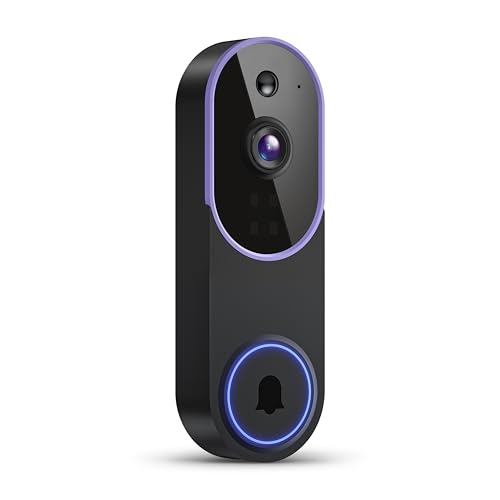
Orbitell 1080p Wireless Wi-Fi Video Doorbell Camera with Two Way Audio, Night Vision, Cloud Storage, Smart AI Motion Detection, Support 2.4GHz Wi-Fi only
This little Orbitell doorbell earns the "Best for AI Motion Alerts" slot because it delivers surprisingly reliable person-style detection at a price point you won't believe — $9.99 and a 4.0-star crowd rating. You're getting 1080p feed, two-way audio, night vision and "smart" motion filtering that separates people from trees and passing cars more often than not. For routine porch problems — package thieves, curious delivery drivers, or a kid lingering at the side-door blind spot — the AI alerts cut down the noise and get you actionable notifications.
Key features matter where it counts. The camera is wireless and talks to 2.4GHz Wi‑Fi, so setup is straightforward for renters and homeowners alike. Night vision is adequate for identifying faces on a covered porch, though not for reading a plate across the street. Cloud storage is supported (expect subscription options), and two‑way audio lets you deter package grabbers in the moment. The app is basic but usable; latency and occasional missed alerts happen, but the AI motion filtering keeps false alarm fatigue manageable when you configure zones.
Who should buy this? If you want a cheap, no‑frills doorbell that actually reduces nuisance alerts, this is a strong value play. It's ideal for renters who can't hardwire a chime and for homeowners who need an inexpensive drop‑in camera for a secondary entrance or a blind side door. Don't expect top-tier build quality or pro‑grade image detail. For primary entry coverage on higher-crime streets, combine it with a higher-end system or a second camera aimed at the driveway.
Honest caveats: it's 2.4GHz only, so modern 5GHz‑only networks won't work without adjustments. The ultra-low price means limited manufacturer support and a basic app experience — software updates and long-term cloud policy are the trade-offs you accept at this budget. Pro tip: mount the camera 42–48 inches off the ground and use motion zones in the app to avoid traffic and tree-triggered alerts.
✅ Pros
- Accurate AI motion alerts
- Extremely low price
- Simple 2.4GHz wireless setup
❌ Cons
- 2.4GHz Wi-Fi only
- Cloud subscription likely required
- Key Ingredient: Smart AI motion detection
- Resolution: 1080p HD
- Best For: Best for AI Motion Alerts
- Connectivity: 2.4GHz Wi‑Fi only
- Storage: Cloud storage supported (subscription typical)
- Pro Tip: Set motion zones to reduce false alarms
-
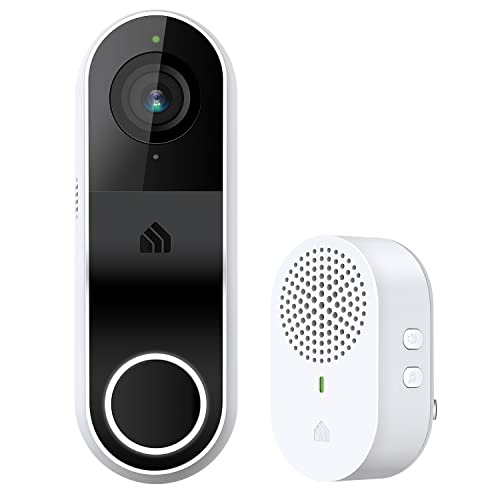
Ring Video Wired Doorbell (newest model), Home or business security, Two-Way Talk, advanced motion detection, HD camera and real-time alerts to monitor your front door (wiring required)
The Ring Video Wired Doorbell earns the "Best for Hardwired Installations" slot because it does what wired systems are supposed to do: stay powered, stay connected, and stay online. When you tie this unit into your existing doorbell transformer and chime, you get constant power for continuous uptime, crisp two‑way audio without frequent battery drops, and more consistent motion alerts than battery models. That consistency matters if you’re trying to stop recurring package thefts or keep a covered side door from becoming a blind spot.
Under the hood you get an HD camera, two‑way talk, advanced motion detection with adjustable zones, reliable night vision, and Ring’s mature notification pipeline. In real use that means you’ll see a delivery driver in decent detail, talk them off your porch, and get alerted only when the motion zone you configured is triggered — which cuts down on false‑alarm fatigue from passing cars. The trade‑off is Ring’s cloud‑first storage model; free snapshot alerts arrive, but full video history requires a Protect plan. Pro tip: test transformer voltage and the included chime connector before you mount; a mismatched transformer is the most common install snag.
Buy this if you own the house or manage a business and already have doorbell wiring. It’s the economical choice for a low‑maintenance, always‑on front door camera and integrates neatly into the wider Ring ecosystem if you already have Ring lights or cameras. If you’re a renter or you need local-only recording/watch‑it‑on‑your‑terms storage, consider a battery model or a system that supports local NVRs instead.
Honest caveats: Ring’s app can lag on lower‑bandwidth networks, and the unit leans on cloud storage for archived footage. You’ll need a compatible transformer (typically 16–24 VAC) and basic wiring skills — or a pro install — to avoid chime or power issues. Also, tuning motion zones is necessary; out‑of‑the‑box settings will trigger more alerts than you want.
✅ Pros
- Continuous power via existing doorbell wiring
- Affordable wired option — $49.99
- Pro tip: tune motion zones
❌ Cons
- Requires doorbell wiring and chime compatibility
- Cloud subscription for video history
- Key Feature: Always‑on wired power for reliability
- Night Vision: Clear IR night image for porch monitoring
- Best For: Best for Hardwired Installations
- Power / Compatibility: Requires 16–24 VAC transformer
- Storage: Cloud‑first video history (Protect plan required)
- Pro Tip: If you see repeated false alerts, reduce zone size and raise sensitivity thresholds
-
Ring Battery Doorbell (newest model), Home or business security with Head-to-Toe video, Live View with Two-Way Talk, and Motion Detection & Alerts, Venetian Bronze
The Ring Battery Doorbell (newest model) earns "Best for Head-to-Toe Coverage" because it’s built around a tall field of view and flexible mounting that actually captures both faces and packages. Put it at the right height and you’ll see a delivery on the stoop and the person who left it — not just a cropped forehead or a shadow. Live View, two-way talk, and adjustable motion zones turn that tall framing into practical coverage, not just marketing copy.
Key features you’ll use: vertical video framing, battery or hardwired power, real-time alerts, and two-way audio. In a real-world package-theft scenario, the tall angle reduces the “blind spot” at your doorstep; you won’t miss a thief bending down for a box. Motion zone tuning cuts down on false alerts from the street, and Live View lets you speak to someone on your porch before they reach the door. Pro tip: mount the doorbell 42–48 inches off the ground — it’s the sweet spot to catch faces and packages without distortion.
Buy this if you want simple, reliable coverage for a standard porch or narrow entryway — especially if you’re a renter who needs a battery option or a homeowner planning to hardwire for constant power. It’s a good match for homes with steps or raised porches where a wider horizontal camera misses lower details. If you have a busy sidewalk nearby, combine the doorbell with a side-mounted camera or tune the motion zones to avoid false alarms. Pro tip: for renters, use the detachable quick-release battery and a non-permanent wedge mount to get the same head-to-toe view without drilling.
Drawbacks are practical: you’ll need a Ring Protect subscription to review recorded clips, and on very active entryways the battery will drain faster with frequent events and Live View use. The app is straightforward, but like any cloud-first system it depends on your Wi‑Fi quality; weak signals mean delayed alerts or pixelated video. Pro tip: if you plan heavy use, hardwire the unit or add a cheap Wi‑Fi extender aimed at the doorbell for consistent performance.
✅ Pros
- Tall vertical field captures faces and packages
- Battery or hardwired power flexibility
- Simple Live View and two-way talk
❌ Cons
- Recorded video requires subscription
- Battery drains faster with frequent motion
Pro tip: tune motion zones to exclude street traffic and reduce false alerts.
- Key Ingredient: Tall vertical field of view for full-door coverage
- Detection: Adjustable motion zones, customizable sensitivity
- Best For: Best for Head-to-Toe Coverage on porches
- Power Options: Rechargeable battery or hardwired installation
- Storage: Cloud-based clips (Ring Protect subscription required)
- Pro Tip: Hardwire for heavy-use sites; battery for renters
-
Ring Battery Doorbell (newest model), Home or business security with Head-to-Toe video, Live View with Two-Way Talk, and Motion Detection & Alerts, Satin Nickel
This Ring Battery Doorbell earns the "Best for Satin Nickel Finish" spot because it ships with a dedicated satin-nickel faceplate and a clean vertical profile that actually matches metal hardware instead of looking like an afterthought. As a former security pro, I can tell you finishes matter: a doorbell that blends with your trim stays tamper-resistant and less likely to be pried off by opportunists. If curb appeal is important and you want a metal look without custom painting, this model nails it.
The unit delivers Head-to-Toe video, live view, two-way talk, and motion alerts you can configure from the app. In real-world terms that means you get a vertical framing that captures faces and packages on the porch, push notifications when someone lingers at the door, and quick two-way audio to deter package thieves. Battery operation makes it renter-friendly; hardwiring keeps the battery topped for homeowners who prefer always-on reliability. Expect decent night performance and typical app latency — usually fine for live interactions, but plan for a cloud subscription if you want 24/7 recorded history.
You should buy this if you want a reliable, attractive doorbell without an enterprise setup — renters who need an easy install and homeowners replacing a standard doorbell both fit. It’s strong for package-defense on the front porch and for doors where a satin-nickel finish matters to your look. Pro tip: mount the camera so the lens center is about 46–48 inches off the ground — that framing gives you face-first, package-in-view shots without awkward angles. If you have a side-door blind spot, add a small auxiliary camera to cover the approach.
Be honest about limits: Ring leans on cloud storage for easy replay and sharing, which means subscription fees if you want full access to past clips. Motion detection can still produce false alerts in high-traffic areas or when a tree limb moves across the frame — false alarm fatigue is real. And while the app is mature, it ties you into Ring's ecosystem; if you insist on local-first storage and absolute privacy control, look elsewhere or prepare to add a local NVR to your system.
✅ Pros
- Satin nickel faceplate included
- Head-to-toe video framing
- Battery or hardwired power options
❌ Cons
- Cloud video history requires subscription
- Motion alerts can be noisy
Pro tip: Use motion scheduling and limit motion zones to cut false alerts.
- Resolution: Head-to-toe HD video
- Power Options: Rechargeable battery or hardwired
- Best For: Best for Satin Nickel Finish
- Field of View: Vertical framing to capture face and packages
- Storage / Connectivity: Cloud storage available (subscription); Wi‑Fi
- Pro tip: Mount 46–48" high for best face-and-package coverage
-
Blink Video Doorbell (newest model) – Head-to-toe HD view, two-year battery life, and simple setup. Required Sync Module not included – Add-On (Black)
This doorbell earns the "Best for Existing Blink Systems" spot because it slots into Blink's ecosystem the way it was designed to — head‑to‑toe HD coverage, a two‑year battery life, and a setup flow that mirrors every other Blink camera. If you already own a Sync Module and a couple of Blink cams, this is the least painful way to add a full‑featured doorbell without reworking your whole smart home. Note: the Sync Module is required but not included with this listing.
Key features translate to real benefits. The tall vertical field of view helps you catch deliveries sitting on the mat and heads on the porch — fewer cropped packages, fewer “where did it go?” videos. The battery longevity means you won't be climbing a ladder every month; the Blink app is intentionally simple so you get alerts without an IT course. Storage works two ways: cloud clips (subscription) for convenience, or local USB storage if you add the Sync Module 2. Motion sensing is straightforward and reliable for porch traffic, but it’s not the most sophisticated object‑classification system on the market. Pro tip: schedule motion zones and quiet times in the app to avoid false alarms during regular delivery hours.
Buy this if you already have Blink gear or want a low‑maintenance, battery‑first doorbell for a rental or a homeowner who dislikes monthly fees. It’s an ideal add‑on when you want consistent app behavior across devices and the option to keep clips locally with a Sync Module. Don’t buy it if you need best‑in‑class night vision, advanced person/vehicle AI, or continuous video recording — those are different product classes. Pro tip: for side‑door installs, use the included wedge mount to eliminate blind spots on the approach path.
Honest caveats: adding the Sync Module (if you don’t already own one) increases total cost and is required for local storage. The motion processing is conservative — fewer phantom alerts, but also fewer granular detections like package vs. person without a subscription. App simplicity is a feature for most homeowners, but power users will notice missing advanced automation and analytics. Price‑to‑value is solid if you’re in the Blink ecosystem; if you’re starting from scratch, compare with competitors that bundle higher‑end AI or continuous recording before deciding. Pro tip: if you need person detection or long clip history, plan for the subscription or a different model upfront.
✅ Pros
- Two‑year battery life
- Seamless Blink system integration
- Vertical HD view captures packages
❌ Cons
- Sync Module required, sold separately
- Limited advanced analytics
- Resolution: Head‑to‑toe HD vertical framing
- Battery life: Up to two years per charge
- Storage: Cloud subscription or local via Sync Module 2 (pro tip: use USB backup)
- Motion detection: Basic, adjustable sensitivity
- Night vision: Adequate for typical porch lighting
- Best For: Existing Blink Systems and battery‑first installs
-
Blink Video Doorbell (newest model) – Head-to-toe HD view, two-year battery life, and simple setup. Sync Module Core included – System (Black)
The Blink Video Doorbell earns "Best for New Blink Setups" because it removes the usual friction for first-time smart-doorbell buyers: battery power means no wiring, the Sync Module Core is included for reliable local networking, and the app keeps things straightforward. If you want a painless front-door upgrade that won't require an electrician or a weekend of troubleshooting, this is the path of least resistance. I've seen wired installs fail on basics like connection stability and power; Blink sidesteps those common failure modes.
Key features: a head-to-toe HD field of view, two-way audio, solid night illumination, and a quoted two-year battery life under normal use. Practically, that means you catch porch package thieves front-to-back and get clear face detail on a single frame without swapping batteries every few months. The Sync Module Core gives a local network anchor — Blink is cloud-first, but the module lets you add optional local USB storage if you prefer keeping clips off the cloud. Motion detection is simple to set up, though sensitivity tuning matters to avoid false alarm fatigue from passing cars or tree shadows.
You should buy this if you want a low-effort, renter-friendly doorbell or a homeowner who values reliability over bells-and-whistles. Renters get a no-drill install and easy removal; homeowners get a dependable primary door camera without paying for overbuilt surveillance features they won't use. If you need advanced integrations, high-end night clarity, or professional monitoring, consider other systems — but for a straightforward front-door solution at a reasonable price-to-value, Blink hits the mark.
Honest caveats: motion alerts can be twitchy in busy street scenarios, and the app's feature set is intentionally lean compared with premium brands. Night image quality is good for identification at the door, but it won't match more expensive cameras with larger sensors. Also plan on deciding whether cloud storage is worth the convenience or if you'll buy a USB drive for local clips via the Sync Module.
Pro tip: Mount the doorbell 36–48 inches off the ground and angle slightly downward—this captures full head-to-toe views and reduces false triggers from distant motion.
✅ Pros
- Two-year battery life
- Sync Module Core included
- Head-to-toe HD field of view
❌ Cons
- Cloud subscription recommended for full features
- Motion alerts can be overly sensitive
Pro tip: Use the Sync Module's optional USB local storage to avoid monthly cloud fees.
- Video: Head-to-toe HD field of view
- Battery: Up to two years typical, depends on usage
- Storage: Cloud-first with optional local USB via Sync Module
- Integration: Simple app; Alexa support, limited third-party APIs
- Best For: Best for New Blink Setups
- Special Feature / Pro Tip: Sync Module Core included — conserve battery by disabling excessive live-views
Factors to Consider
Power & installation: wired vs battery
Decide whether you want wired power or a battery model. Wired doorbells give continuous power for higher-res streaming and fewer dead batteries, but they need compatible chime wiring and may require an electrician if your transformer is old. Battery models are great for renters and side doors because they’re easy to install and don’t touch your house wiring, but expect to recharge or swap batteries and sometimes lower continuous recording capability. If you live in cold weather check battery life ratings — lithium batteries handle cold better than standard cells.
Video quality, field of view, and night vision
Resolution and optics matter: 1080p is fine for faces at the porch, but 2K gives more readable license plates and package details at a distance. Look for HDR or wide dynamic range to handle bright sun and shaded doorways; a wide field of view (120–160°) reduces blind spots but can distort edges. For night work, compare IR black-and-white versus color night vision—color works better under porch lights while IR is stronger in total darkness. Night performance, not just the megapixel number, will tell you whether a camera can reliably identify a person on your porch.
Motion detection accuracy and false alarms
False alarms kill trust — you’ll mute notifications if every leaf or passerby triggers an alert. Prioritize cameras with person-only detection, adjustable motion zones, and congestion controls in the app so you can block your street or driveway. Some systems let you set activity schedules and sensitivity per zone, which saves battery and cloud costs. If you’ve had false alarm fatigue, test motion rules for a week before relying on them for automation like smart lock actions.
Storage, privacy, and subscription trade-offs
Decide if you want cloud storage, local storage, or both. Cloud plans give convenient off-site backups and easy sharing, but they add monthly fees and privacy exposure; local options like microSD or a networked base station avoid monthly costs and keep footage in your control. Many midrange models offer both so you can save clips locally and keep critical alerts in the cloud. If privacy is important, pick a vendor that supports encrypted local storage or RTSP/ONVIF export.
Compatibility & smart-home features
Check chime compatibility, smart lock integration, and whether the camera plays nicely with Alexa, Google, or HomeKit depending on your ecosystem. Some doorbells require a specific chime connector or a wireless chime adapter, and not all support two-way audio latencies that are acceptable for smart lock unlocks. Also verify Wi‑Fi needs — 2.4 GHz typically reaches better, 5 GHz gives less interference but shorter range. Balance features against reliability: extra integrations are nice but only if they’re stable and well-supported in the app.
Pro tip: During buying, map the exact mounting spot and measure Wi‑Fi signal there with a phone app. If the signal is weak, plan for a dedicated mesh node or pick a model that supports 5 GHz and 2.4 GHz fallback — it prevents dropped live views and missed door events.
Frequently Asked Questions
Do I need a professional to install a doorbell camera?
Not always. Many modern doorbells are designed for DIY install with clear templates and screwdriver-only mounts, but wired installs that touch your transformer or require replacing a chime may be best handled by an electrician. If you’re a renter or want no permanent changes, choose a battery model with adhesive or a no-drill bracket.
Can I use a doorbell camera without a subscription?
Yes, some models let you store footage locally on microSD or a hub, letting you skip monthly fees. However, cloud subscriptions often add person detection, longer clip retention, and easy off-site access — weigh the recurring cost against how much convenience and time-stamped evidence you want. Cheap cameras with local-only storage are fine for simple door monitoring if you’re comfortable managing footage yourself.
How do I stop my street or trees from causing constant alerts?
Use detection zones and person-only filters available in the camera app to mask sidewalks or branches. Lower sensitivity for distant zones and use schedule-based active periods (for example, only trigger overnight or during typical delivery hours). If the app lacks good filters, consider a different model — false alerts are the quickest way to ignore a camera.
What’s the best mounting height and angle for catching faces and packages?
Mount doorbells about 42–48 inches off the ground angled slightly toward the approach path to capture faces naturally and packages on the step. If you have a recessed porch or a side door, angle mounts or wedge brackets can remove blind spots and improve ID at the edges. For high terraces, consider a secondary narrow-field camera aimed at the landing because wide-angle distortion can make face ID harder.
Will a doorbell camera work in bad weather?
Most reputable doorbell cameras are rated IP65 or higher and handle rain, sleet, and snow, but exposure to direct runoff or full water jets shortens life. Check operating temperature ranges — some batteries struggle in extreme cold and will need a wired connection or a winter-specific battery solution. Mount under an overhang when possible and use stainless or security screws to prevent rusting and tampering.
Can a doorbell camera be integrated with my smart lock or alarm?
Many systems offer integrations so a verified visitor event can trigger a smart lock or disarm an alarm, but implementations vary in reliability. Prefer devices that use established standards (Zigbee, Z-Wave, HomeKit, or cloud APIs) and test interactions before automating unlocks — you don’t want false person detections to open doors. For critical automations, add a confirmation step or use a geofence combined with the camera event.
How do I prevent someone from stealing the doorbell camera itself?
Use models with theft-detection (tamper alerts) and physical security like anti-theft screws and reinforced mounting plates. For high-risk homes, mount under a porch overhang or add a secondary small camera that watches the doorbell so you have footage if it’s ripped off. Also enable cloud uploads for short retention so evidence isn't lost if the unit is taken.
Pro tip: During setup, record a short test clip and copy it off the vendor app to your phone or local drive. That verifies quality, angle, and retention immediately so you don’t discover a blind spot after an incident.
Conclusion
A reliable doorbell camera balances power type, night performance, motion accuracy, and storage options — not just the highest megapixel count. For homeowners who want continuous coverage and smart-lock integration, a wired midrange model with local backup and optional cloud works best; renters should pick a battery model with adhesive or no-drill mounts. Pro tip: pick a unit with strong person-detection and test motion zones for a week before relying on it for automated actions or evidence collection.