

how to set up motion detection smart doorbells for summer yard protection in 2026
Summer is when your front porch becomes a target. Package thieves work fast—they scout neighborhoods, watch for deliveries, and grab. A smart doorbell with motion detection isn't just a nice convenience; it's the difference between a recorded incident and a lost shipment. I've seen it happen dozens of times: homeowners without video proof filed insurance claims that went nowhere. The thieves moved on to the next house. You won't be that house.
Our Top Picks
Affiliate disclosure: if you buy through these links, we may earn a commission at no extra cost to you.
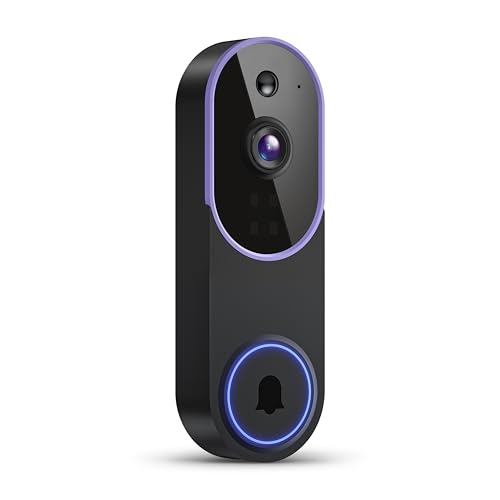

ElioVana 720P Smart Video Doorbell Camera with Motion Detection, Night Vision, Cloud Storage, Two-Way Talk, Battery Powered, Home or Business Security, 2.4GHz Wi-Fi(Excluding Receiver)
$15.99Check Price
Motion detection on a smart doorbell is different from regular video. It's not just "camera is on"—it's intelligent awareness. Your doorbell can distinguish between a passing car, a delivery driver, and someone lingering near your package. Set it up correctly, and you'll catch the moment that matters. Set it up wrong, and you'll get false alerts every time a leaf blows past. This guide walks you through the setup, configuration, and positioning that actually works in real summer conditions: bright sunlight, heat distortion, and yards with foot traffic.
Table of Contents
- Understanding Motion Detection Zones and Sensitivity
- Choosing the Right Position and Angle for Your Doorbell
- Configuring Motion Zones to Eliminate False Alerts
- Setting Up Smart Notifications and Recording
- Weatherproofing and Summer-Specific Adjustments
- Testing and Troubleshooting Your Setup
- Frequently Asked Questions
Understanding Motion Detection Zones and Sensitivity
Motion detection on a smart doorbell works by comparing frame-to-frame video changes. When the sensor detects pixel differences above a certain threshold, it triggers an alert. Sounds simple. It's not. On a bright summer day, sunlight shifts, shadows move, trees sway in the wind—all of this registers as motion. You need to understand how your specific doorbell handles this before you even mount it.
Most quality doorbells (Ring, Eufy, Logitech Circle View, Arlo) let you set sensitivity on a scale—usually 1 to 10, where 1 is "practically catatonic" and 10 is "hair moving in the breeze triggers an alert." In summer, you can't stay at 10 without going insane from notifications. Here's what I recommend: start at 5 or 6, then adjust after a few days of real-world testing. Some doorbells also offer "smart" motion detection that uses AI to distinguish people from environmental noise—that's worth the extra cost if your budget allows. Eufy's human-detection and Logitech's person-detection are genuinely better at cutting false alerts than basic PIR sensors.
Understand your doorbell's motion detection type before you buy. Passive infrared (PIR) sensors detect heat. They're cheap and common but struggle in direct sunlight and with parked cars. Pixel-based detection (video analysis) is more accurate but uses more processing power and can drain battery faster on wireless doorbells. For summer yard protection, pixel-based detection with AI filtering is worth the trade-off.
Choosing the Right Position and Angle for Your Doorbell
Position is everything. I've seen doorbells mounted high and centered, doorbells angled down, doorbells aimed at the street instead of the porch. Most of these were wrong. Your doorbell needs to see three zones: the front door and entry, the package delivery area (usually directly in front or to the side), and approaching foot traffic. That's not one angle—that's a compromise angle that captures all three without wasting the field of view on empty sky or irrelevant street activity.
Mount your doorbell at 48 to 52 inches above the ground—roughly chest height. This height captures faces clearly, catches packages at hand level, and doesn't look down into people's shoes or up at sky. Angle it 15 to 20 degrees downward from horizontal. You want the top of the frame to include tree branches and the sky (for context), but the bulk of the frame focused on entry and approach zones. Too high, and you miss package details. Too low, and you get a distorted wide-angle view of boots and concrete.
If you have a side entry or secondary porch area, consider a second doorbell or a separate motion-sensor camera aimed there. Many summer thefts happen through side yards—deliveries left at the side gate, AC units accessible, or yards with blind spots. One doorbell at the front won't catch that. Be honest about your home's layout. A corner lot needs different coverage than a mid-block house. A home with a wraparound porch needs a different strategy than one with a small stoop.
Configuring Motion Zones to Eliminate False Alerts
This is where most people fail. They mount the doorbell, enable motion detection at a standard setting, and get bombarded with alerts about cars passing on the street two houses down. Then they turn off motion detection entirely. The doorbell becomes a nice video camera with no intelligence. Don't do this.
Your doorbell's app should allow you to draw custom motion zones. If it doesn't, consider a different model. Draw a tight zone around your front door, porch, and package delivery area. Exclude the street, driveway edges, and neighboring yards. This sounds simple, but it requires patience. Make your zone smaller than you think it needs to be—you can always expand it later, but cutting down false alerts is harder. In summer, be especially aggressive about excluding areas with vegetation. Wind-blown tree branches and shrub movement are your biggest false-alert culprit.
Set your sensitivity lower in the afternoon (3 PM to sunset) when solar glint and heat distortion are worst. Some doorbells allow time-based sensitivity rules—use them. High sensitivity during morning and evening (when deliveries happen), lower sensitivity during peak sun. If your doorbell doesn't support this, it's less intelligent than the 2026 market demands. Also, create a "household" or "trusted zone" in your app. When you're home and moving around your porch or driveway, the doorbell shouldn't alert you for every step. A good smart doorbell learns your routine—use that feature.
Setting Up Smart Notifications and Recording
Notifications and recording are not the same thing. You need both, but they work differently. Recording is always-on (or scheduled). Notification is triggered by motion and delivered to your phone. If you're at work and get pinged every 90 seconds because a delivery person is at your door, that's useless. If you're at work and miss a package theft because you disabled notifications, that's worse. The solution is tiered alerting.
Configure your doorbell to send a high-priority notification only for "person detected" events, not general motion. You want to know if someone is approaching. You don't want to know if wind moved a branch. Set recording to continuous or schedule it for your typical delivery windows (usually 9 AM to 6 PM in summer). Continuous recording uses more cloud storage and battery, but for summer months when theft risk is highest, it's worth the cost. A month of continuous recording from a 1080p doorbell is roughly 50-100 GB depending on frame rate and compression. Budget accordingly.
Use local storage if your doorbell supports it. Eufy and some Logitech models offer local backup or primary storage via a USB drive or hub—this keeps your video private and available even if your internet goes down or the cloud service has an outage. I recommend this over pure cloud storage. Cloud is convenient, but local storage is more reliable. Many renters prefer local storage because the homeowner can't see every person who enters the property. Talk to your doorbell provider about your options before setup.
Weatherproofing and Summer-Specific Adjustments
Summer brings heat, moisture, and intense UV exposure. Your doorbell needs to handle it. All quality smart doorbells are IP54 or IP65 rated (weather-resistant), but that's only part of the story. Direct sun heats the lens and housing. Condensation forms when cool morning air hits a warm lens. Pollen and dust accumulate. These aren't failures—they're maintenance issues. Plan for them.
Consider a simple doorbell hood or weather cover. It's a cheap accessory (usually $20-40) that shields the lens from direct sun and rainfall, reducing heat buildup and lens fogging. If your doorbell is under an eave or porch roof, you're already ahead. If it's exposed, a hood is worth buying. Clean your lens every two weeks in summer—dust and pollen degrade video quality faster than you'd expect. Use a soft, dry cloth. Never spray cleaning solution directly on electronics. Also, check your doorbell's housing for gaps or loose seals. Wasps love to nest in tight, protected spaces on doorbells. It sounds silly, but I've had homeowners report that motion detection stopped working because a wasp nest blocked the sensor.
Heat can also affect battery life on wireless doorbells. If your doorbell is on batteries, expect 30-50% faster drain in high heat. Charge more frequently or switch to a wired model if possible. Wired doorbells don't have this problem and are generally more reliable in summer because they're not dependent on rechargeable battery chemistry degrading in heat.
Testing and Troubleshooting Your Setup
After installation, you have a one-week window to test and adjust. Don't skip this. Your setup isn't done until you've reviewed real-world footage and confirmed it's doing what you intended. Walk past your doorbell from different angles and distances. Review the recordings. Can you clearly see a person
Frequently Asked Questions
How do I set up motion detection on my smart doorbell to avoid false alerts?
Start by configuring motion zones to focus only on areas like your porch and walkway, excluding trees, bushes, and street traffic that trigger unnecessary notifications. Adjust sensitivity levels based on your environment—lower sensitivity for busy streets, higher for quiet neighborhoods—and test different settings over a few days to find the optimal balance for your home.
What is the best position to install a smart doorbell for motion detection coverage?
Mount your doorbell at eye level (typically 48-60 inches high) with a slight downward angle to capture faces and packages on your porch while minimizing ground-level movement. Ensure the lens has a clear, unobstructed view of your main entry point and delivery zones, avoiding direct sunlight which can wash out video quality.
Is it worth getting a smart doorbell with motion detection for summer package protection?
Yes, motion detection smart doorbells are highly effective for summer when package theft peaks. They provide real-time alerts, recorded footage for evidence, and visible deterrence that can significantly reduce theft risk compared to standard doorbells.
How do I choose the right motion detection sensitivity for my doorbell?
Consider your environment: busy neighborhoods need lower sensitivity to prevent constant alerts from pedestrians and cars, while quiet residential areas benefit from higher sensitivity to catch package thieves. Most modern smart doorbells allow granular adjustments, so start at medium sensitivity and refine based on the false alerts you receive over the first week.
What motion detection zones should I set up on my video doorbell?
Create primary zones covering your porch and front steps where packages are typically placed, and secondary zones for your walkway and driveway approach. Exclude zones that include tree branches, nearby traffic, or neighbor properties to eliminate false alerts while maintaining security coverage.
How can I use motion detection to catch package thieves in real-time?
Enable push notifications on your smartphone for motion alerts during typical delivery hours, and review the recorded footage immediately to identify suspicious activity. Many smart doorbells offer cloud storage and two-way audio, allowing you to confront potential thieves in real-time or contact authorities with timestamped evidence.


