Best Alarm Systems for Everyday Use

Best Alarm Systems for Everyday Use

⚠️ Affiliate Disclosure: This post contains affiliate links. If you purchase through our links, we may earn a small commission at no extra cost to you. Full disclosure here.
🔍 Why you can trust this roundup: We reviewed the leading options in this category and narrowed the list to the strongest picks based on performance, value, and real-world usability.

You do not need a giant, overbuilt system to protect an everyday home. You need the right mix of reliable sensors, a solid app, and alerts that do not train you to ignore them after the third harmless notification. I have seen the weak spots: a package theft on the front porch, a side-door blind spot that nobody checked until after the fact, and renters who needed a fast DIY setup while homeowners wanted something they could expand later. In this roundup, you will find alarm systems that range from simple 8-piece kits to larger 14- and 24-piece packages, including options with no monthly fee, optional professional monitoring, WiFi plus GSM/4G backup, and local-first setups for people who want to keep costs down without giving up basic protection.

Main Points

Our Top Picks

Ring Alarm 14-Piece Kit (newest model), Wireless smart home or business security system, expandable, easy setup, Mobile App Control, 24/7 Professional Monitoring, Alexa CompatibleRing Alarm 14-Piece Kit (newest model), Wireless smart home or business security system, expandable, easy setup, Mobile App Control, 24/7 Professional Monitoring, Alexa CompatibleKey Feature: 14-piece expandable wireless alarm kitConnectivity: Wi-Fi with mobile app controlBest For: Best for Easy DIY SetupRead Our Analysis Best Budget Starter KitRing Alarm 8-Piece Kit (newest model), Home or business security system with optional 24/7 professional monitoringRing Alarm 8-Piece Kit (newest model), Home or business security system with optional 24/7 professional monitoringKey Feature: 8-piece DIY alarm starter systemMaterial / Build: Compact plastic sensors and base stationBest For: Best Budget Starter KitRead Our Analysis Best No Monthly Fee OptionWiFi Wireless Alarm System for Home Security - 24/7 Protection Smart Home Devices 4.3WiFi Wireless Alarm System for Home Security - 24/7 Protection Smart Home Devices 4.3" Touch Screen, GSM/4G+WiFi, App Instant Alerts, No Monthly Fee, Alexa Compatible for Villa, Kids Safety (24 pcs)Key Feature: 24-piece alarm kit with app alertsMaterial / Build: Touch-screen control hub with wireless sensorsBest For: Best No Monthly Fee OptionRead Our Analysis Best for Apartment SecurityWireless Alarm System for Home Security,24 Pcs Home Alarm System Wireless DIY Kit,WiFi+GSM/4G with Instant App Alerts NO MonthlyFees,SOS Button,App & Remote Control,Work with Alexa,for ApartmentWireless Alarm System for Home Security,24 Pcs Home Alarm System Wireless DIY Kit,WiFi+GSM/4G with Instant App Alerts NO MonthlyFees,SOS Button,App & Remote Control,Work with Alexa,for ApartmentKey Feature: WiFi + GSM/4G alarm connectivityMaterial / Build: Lightweight DIY sensor and siren kitBest For: Best for Apartment SecurityRead Our Analysis Best for Loud 120dB SirenWiFi Alarm System for Home Security, 120dB Wireless Alarm Security System with Free Notification APP Control and Motion Sensor Siren, Remote Control for Shed GarageWiFi Alarm System for Home Security, 120dB Wireless Alarm Security System with Free Notification APP Control and Motion Sensor Siren, Remote Control for Shed GarageKey Feature: 120dB siren with motion-triggered alarm responseMaterial / Build: Wireless alarm components for easy placementBest For: Best for Loud 120dB SirenRead Our Analysis Best Door/Window Starter BundleWiFi Door Alarm System, Wireless DIY Smart Home Security System, with Phone APP Alert, 8 Pieces-Kit (Alarm Siren, Door Window Sensor, Remote), Work with Alexa, for House, Apartment, by tolviviovWiFi Door Alarm System, Wireless DIY Smart Home Security System, with Phone APP Alert, 8 Pieces-Kit (Alarm Siren, Door Window Sensor, Remote), Work with Alexa, for House, Apartment, by tolviviovKey Feature: Door/window intrusion alerts with sirenMaterial / Build: Lightweight DIY plastic componentsBest For: Best Door/Window Starter BundleRead Our Analysis Best for Reliable 4G BackupPGST Wireless Home Alarm System 8-Piece Kit, WiFi/4G Alarm System for Home Security with Phone APP Alert (Door Sensor,Siren, Remote, Motion Detector) for Home,Apartment, Compatible with Alexa(105-A)PGST Wireless Home Alarm System 8-Piece Kit, WiFi/4G Alarm System for Home Security with Phone APP Alert (Door Sensor,Siren, Remote, Motion Detector) for Home,Apartment, Compatible with Alexa(105-A)Key Feature: WiFi and 4G backup alertsMaterial / Build: Basic plastic componentsBest For: Best for Reliable 4G BackupRead Our Analysis

🏆 Best For: Best for Easy DIY Setup

Best for Easy DIY Setup

Ring Alarm 14-Piece Kit earns the Best for Easy DIY Setup spot because it removes the usual pain points. You are not hunting for a control panel that looks like airport equipment, and you are not paying for a complicated install that ends with a technician drilling half your wall. The sensors are wireless, the app is straightforward, and the system is built for a homeowner or renter who wants solid coverage without a weekend project turning into a headache. For most people, that matters more than a long feature sheet.

What you get here is a practical starter system with enough pieces to cover the spots that actually get used: entry doors, main rooms, and key windows. That is the difference between feeling “armed” and actually being protected when a package gets lifted off the front porch, or when someone tries a side door that doesn’t have a clear camera view. The Ring app makes it easy to arm, disarm, and check status from your phone, and 24/7 professional monitoring is there if you want a higher level of backup. Alexa compatibility is a nice add-on if your home already runs on voice control, but the real value is the system’s simple day-to-day use. You can set it up, learn it fast, and keep using it without needing an IT degree.

This is the right buy if you want a clean DIY path and you live in a typical house, apartment, or rental where you need dependable coverage fast. It is especially smart for first-time alarm buyers, busy families, and anyone replacing a flaky old system that caused false alarm fatigue. If you have a side-yard blind spot, a back entry, or a garage door you always forget to check, this kit gives you an easy way to build basic perimeter protection and expand later. Pro tip: put your contact sensors on the doors you actually use, not just the front door. Most real-world break-ins and accidental security lapses happen at the side or back entry.

The trade-off is that Ring is built around convenience and app-based control, so you should be honest about what you want from a system. If you need deep local-only storage or a more traditional hardwired setup, this is not the most advanced option. And while the kit is easy to live with, the value really depends on how much you will use the monitoring and app features. Pro tip: before buying, map your home’s “walk-in” points on paper. That helps you decide whether this 14-piece kit is enough, or whether you need to add sensors right away.

✅ Pros

  • Fast setup with minimal drilling
  • Expandable for larger homes
  • Professional monitoring available

❌ Cons

  • Cloud features drive the experience
  • Not ideal for local-only users
14-piece expandable wireless alarm kit
  • Connectivity: Wi-Fi with mobile app control
  • Best For: Best for Easy DIY Setup
  • Installation Type: Tool-light, renter-friendly setup
  • Special Feature: 24/7 professional monitoring support
  • Smart Home Compatibility: Works with Alexa
  • Ring Alarm 8-Piece Kit (newest model), Home or business security system with optional 24/7 professional monitoring

    🏆 Best For: Best Budget Starter Kit

    Best Budget Starter Kit

    Ring Alarm 8-Piece Kit earns the Best Budget Starter Kit spot because it gives you the core pieces you actually need without forcing you into a big upfront spend. You get a solid entry into monitored home security for $249.99, and that matters when you want real protection for a condo, starter home, or rental without overbuying gear you may never use. I like that it covers the basics cleanly: entry sensors, motion coverage, a keypad, and a base station. No gimmicks. Just enough hardware to start defending the doors and windows that matter most.

    In real use, this kind of kit is built for the everyday problems people actually have: a package gets snatched off the front porch, a side door sits in a blind spot, or you realize the dog sets off the system every time someone walks past the hall. Ring’s app-driven setup is straightforward, and that matters if you don’t want an IT project on your hands. The optional 24/7 professional monitoring is the big value add here, because it gives you a response path when you’re at work, traveling, or simply asleep and ignore the phone. For a budget system, the ecosystem is also a plus if you already use Ring video doorbells or cameras.

    This is the kit I’d point renters and first-time buyers toward when they want real deterrence without jumping straight into a premium panel-and-sensor ecosystem. It’s especially smart if your home has a few obvious entry points and you want to cover them fast. You can also scale it later if you decide to add a keypad, more contact sensors, or cameras. If your home is larger, has a detached garage, or needs tight coverage across multiple floors, you’ll likely outgrow this 8-piece bundle and should budget for expansion from day one.

    Here’s the honest caveat: Ring is convenient, but convenience comes with trade-offs. You’ll want to think about subscription costs, because the best features often live behind the monitoring plan. And while the system is easy to live with, it’s not the most advanced choice for people who want deep local storage, highly customizable automation, or a fully hardwired-style security setup. For most homeowners, that’s fine. For enthusiasts, it can feel basic. The key is matching it to your house, not the spec sheet.

    ✅ Pros

    • Fast setup for renters and homeowners
    • Optional professional monitoring adds peace of mind
    • Easy app control and expansion

    ❌ Cons

    • Some features need a subscription
    • Basic kit may feel small for larger homes
    8-piece DIY alarm starter system
  • Material / Build: Compact plastic sensors and base station
  • Best For: Best Budget Starter Kit
  • Size / Dimensions: Mixed kit; small-space friendly
  • Special Feature: Optional 24/7 professional monitoring
  • Connectivity: App-based smart security integration
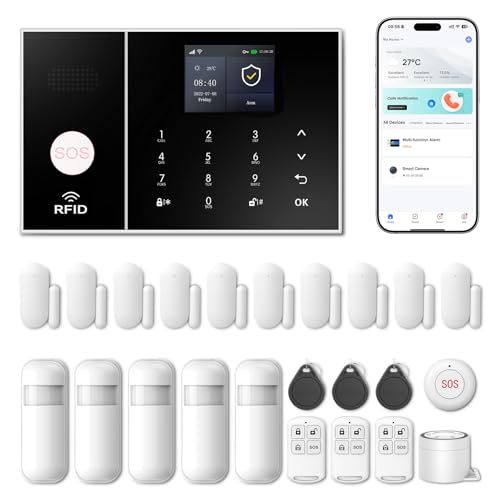
  • WiFi Wireless Alarm System for Home Security - 24/7 Protection Smart Home Devices 4.3" Touch Screen, GSM/4G+WiFi, App Instant Alerts, No Monthly Fee, Alexa Compatible for Villa, Kids Safety (24 pcs)

    🏆 Best For: Best No Monthly Fee Option

    Best No Monthly Fee Option

    This earns the Best No Monthly Fee Option spot because it does the one thing a lot of budget alarm kits fail at: it gives you a usable home security setup without forcing you into a subscription just to get basic protection. At $149.99, you’re getting a 24-piece system with a 4.3" touch screen, GSM/4G plus WiFi connectivity, app alerts, and Alexa compatibility. That matters when you want real coverage for doors, windows, and common entry points without paying a monitoring bill every month. For a homeowner, that can add up fast. For a renter, it can be the difference between actually using the system and letting it sit in a box.

    In real life, this kind of system is strongest at covering the basics: front door, side-door blind spots, basement entry, and window openings that get ignored until after a package theft or a break-in attempt. The touch screen makes everyday use simpler than apps alone, especially for family members who don’t want to dig through menus. GSM/4G backup is the right idea here, because WiFi can go down when you least want it to. Instant alerts also help when you’re away and a sensor trips while a neighbor is supposed to be watching the house. Pro tip: put one entry sensor on the side door first. That’s where a lot of homes are weakest, and it’s often the door thieves test.

    This is a smart buy if you want a straightforward alarm system for a small to medium home, a villa, or a rental where you want protection without drilling a bunch of holes or signing a monitoring contract. It also makes sense if you’re tired of false-alarm fatigue from louder, more complex systems that need constant tuning. If you want a simple, visible control panel, app alerts, and backup connectivity, this fits the bill. If you’re building a full smart home with cameras, locks, and advanced automations, you may outgrow it. Pro tip: renters should check sensor mounting options before install. Adhesive placement is a lot easier to reverse than a hard-mounted setup.

    The trade-off is obvious: no monthly fee usually means you’re taking more responsibility for response and management. You still need to test sensors, keep batteries fresh, and decide how you’ll handle alerts when you’re out. Also, systems in this price range can be very good for perimeter security, but they are not a substitute for quality cameras with strong night vision if you want visual proof of what happened on the porch or driveway. That said, for solid entry detection and everyday peace of mind, this is a practical value play rather than a flashy one. Pro tip: test every door and window after setup. A sensor that looks installed is not the same as one that actually reports reliably.

    ✅ Pros

    • No monthly monitoring required
    • Backup GSM/4G improves reliability
    • Easy touch-screen daily use

    ❌ Cons

    • No included camera verification
    • App features may feel basic
    24-piece alarm kit with app alerts
  • Material / Build: Touch-screen control hub with wireless sensors
  • Best For: Best No Monthly Fee Option
  • Size / Dimensions: 4.3" touch-screen panel
  • Connectivity: GSM/4G and WiFi support
  • Special Feature: No monthly fee with Alexa compatibility
  • Wireless Alarm System for Home Security,24 Pcs Home Alarm System Wireless DIY Kit,WiFi+GSM/4G with Instant App Alerts NO MonthlyFees,SOS Button,App & Remote Control,Work with Alexa,for Apartment

    🏆 Best For: Best for Apartment Security

    Best for Apartment Security

    This earns the Best for Apartment Security spot because it fits the way apartment living actually works: you need fast alerts, simple installation, and a system you can remove when you move. At $135.68, this is not a luxury panel. It is a practical DIY kit that gives you a visible deterrent, instant notifications, and backup connectivity without forcing you into a long contract. For renters, that matters. You want protection on a front door, patio door, or side entry without drilling the place apart.

    The appeal here is the mix of WiFi + GSM/4G, app control, remote arming/disarming, and an SOS button. In real life, that means if someone tries a porch package grab or slips through a side-door blind spot, you get alerted even if your home internet stumbles. The alarm approach also helps with false alarm fatigue. You are not relying only on a camera notification that may or may not be worth opening. You have an audible response, app alerts, and backup communication. For apartments, that layered approach is smart. It is simple enough for non-technical users and flexible enough to cover entry points fast.

    This is a good buy if you rent, travel often, or want a first system before stepping up to a full security package. It is also a solid fit if you want something you can move to a new apartment without starting over. The Alexa support is a nice bonus, but do not buy it just for voice control. Buy it because it gives you basic alarm coverage, quick setup, and no monthly fees. That is the kind of value that makes sense when you are protecting a smaller space and every dollar needs to pull weight.

    The trade-off is straightforward: this is an alarm kit, not a premium monitoring ecosystem. You are getting broad apartment coverage and useful alerts, but you are not getting the polished app experience or advanced video analytics you see in top-tier smart security brands. If you want ultra-fine motion tuning, rich camera history, or deep home automation, look higher up the chain. If you want a dependable apartment alarm that does the job without a contract, this is a sensible pick.

    ✅ Pros

    • No monthly monitoring fees
    • WiFi and GSM/4G backup
    • Easy renter-friendly DIY install

    ❌ Cons

    • App likely feels basic
    • Not ideal for large homes
    WiFi + GSM/4G alarm connectivity
  • Material / Build: Lightweight DIY sensor and siren kit
  • Best For: Best for Apartment Security
  • Size / Dimensions: 24-piece multi-sensor kit
  • Special Feature: Instant app alerts with SOS button
  • Power / Backup: Dual-network protection for outages
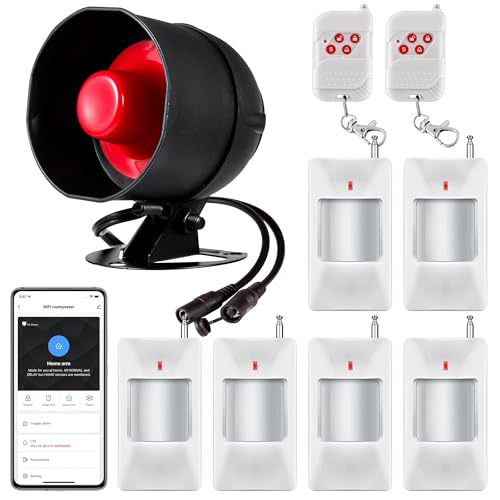
  • WiFi Alarm System for Home Security, 120dB Wireless Alarm Security System with Free Notification APP Control and Motion Sensor Siren, Remote Control for Shed Garage

    🏆 Best For: Best for Loud 120dB Siren

    Best for Loud 120dB Siren

    This system earns the “Best for Loud 120dB Siren” spot because it does one job well: it makes a scene fast. A 120dB alarm is not subtle. If someone pushes a shed door, cracks a garage entry, or slips onto a side patio, that blast gets attention. For a homeowner who wants an obvious deterrent more than a polished whole-home platform, that matters. I’ve seen plenty of break-ins start with a quiet, overlooked door. Loud beats fancy when the goal is to scare off an intruder before they get comfortable.

    The setup is aimed at simple use, which is exactly what you want in a secondary space like a garage, workshop, rental room, or storage shed. You get wireless alarm hardware, motion sensing, app notifications, and remote control without building a full DIY ecosystem. That makes it useful for real-world problems like package theft from a front porch or a back entry that never seems to stay in view. The app control gives you basic remote oversight, and the motion sensor siren gives you a local response even if your phone is buried in your pocket. Pro tip: put the sensor where a person must cross a path, not where a pet or fan will trigger it.

    This is the kind of system you buy when you want fast, no-drama protection and you do not need professional monitoring or a long setup session. Renters can use it for a garage, basement access, or utility room without hardwiring the house. Homeowners can use it as a backup layer in spots that cameras miss, especially a side-door blind spot or detached shed. At $72.19, it hits a useful price-to-value point for basic perimeter defense. It is not the best choice if you want rich video, advanced automations, or polished smart-home integration. It is the better choice if you want a loud alarm that is easy to deploy and hard to ignore. Pro tip: test the siren during daytime first so you know exactly how neighbors will hear it.

    There are trade-offs. You are not getting the detail or verification of a camera-based system, so if you want to confirm whether it was a raccoon or a real person, you will need another device. App quality and motion accuracy can also vary more on budget alarm kits than on premium systems, so you should expect some tuning. That said, for a garage, shed, or other vulnerable access point, a loud siren can be more useful than a cheap camera with weak night vision and delayed alerts.

    ✅ Pros

    • Very loud 120dB deterrent
    • Simple wireless setup
    • Good for sheds and garages

    ❌ Cons

    • No video verification
    • May need motion tuning
    120dB siren with motion-triggered alarm response
  • Material / Build: Wireless alarm components for easy placement
  • Best For: Best for Loud 120dB Siren
  • Size / Dimensions: Compact system for sheds, garages, and small spaces
  • Special Feature: Free app notifications and remote control
  • Connectivity: WiFi-based app control and alerts
  • WiFi Door Alarm System, Wireless DIY Smart Home Security System, with Phone APP Alert, 8 Pieces-Kit (Alarm Siren, Door Window Sensor, Remote), Work with Alexa, for House, Apartment, by tolviviov

    🏆 Best For: Best Door/Window Starter Bundle

    Best Door/Window Starter Bundle

    This earns the “Best Door/Window Starter Bundle” spot because it does the basics without making you overthink the basics. For under fifty bucks, you get a simple alarm package built for the weak points most homes actually have: front doors, back doors, and those windows nobody watches until after a break-in. That matters. A lot of cheap security gear looks good on a product page and fails at the first real job. This one is aimed at the homeowner or renter who wants visible deterrence, loud local alerting, and easy app-based notifications without paying for a full monitored system.

    The practical win here is coverage. Door and window sensors are still one of the best first lines of defense because they catch the entry point, not the aftermath. If someone tries a side door while you’re in the shower or cracks a bedroom window on the ground floor, you want an immediate alarm, not a cloud clip you check later. The included siren gives you local noise, which is useful for scaring off opportunistic entry and waking people inside the home. App alerts add another layer if you’re away, and Alexa support makes it easier to fold into a basic smart home setup. For package theft scenarios on the front porch, this won’t replace a camera or video doorbell, but it does help you secure the door those thieves often test first.

    This is the right buy if you want a starter bundle for an apartment, condo, dorm-style setup, or a small house with a few obvious access points. It’s also a smart fit if you’re a renter and need something DIY that won’t require drilling or a complicated install. If you already have cameras, this fills a different job: it protects entry points. That’s a better use of money than buying yet another cheap camera with weak night vision and false motion alerts. Use this when you want fast setup, basic reliability, and a clear improvement over doing nothing. If your home is larger, has multiple exterior doors, or you want professional monitoring, this is more of a first step than a final answer.

    The honest caveat is that this is a starter system, not a premium security platform. You’re not getting the refinement, polished app experience, or deeper integration you’d expect from higher-end alarm brands. And like most budget DIY kits, the real value depends on careful sensor placement. Put a contact sensor too far from the edge, and you’ll learn about it the hard way when the alarm never trips. Also, if you already deal with false alarm fatigue from overly sensitive motion devices, keep in mind this kit is best for door/window openings, not broad room coverage. That’s actually a strength for some homes. It stays focused on what it does best.

    ✅ Pros

    • Affordable entry into home security
    • Local siren helps deter intruders
    • Good for renters and small homes

    ❌ Cons

    • Limited compared with full alarm systems
    • App quality may feel basic
    Door/window intrusion alerts with siren
  • Material / Build: Lightweight DIY plastic components
  • Best For: Best Door/Window Starter Bundle
  • Size / Dimensions: 8-piece kit, compact sensors
  • Connectivity: Wi-Fi app alerts and Alexa support
  • Special Feature: Easy no-hardwire installation
  • PGST Wireless Home Alarm System 8-Piece Kit, WiFi/4G Alarm System for Home Security with Phone APP Alert (Door Sensor,Siren, Remote, Motion Detector) for Home,Apartment, Compatible with Alexa(105-A)

    🏆 Best For: Best for Reliable 4G Backup

    Best for Reliable 4G Backup

    This kit earns the “Best for Reliable 4G Backup” spot for one simple reason: it gives you a second path when WiFi goes down. That matters. I’ve seen plenty of budget alarms that work fine until the router reboots, the ISP hiccups, or someone unplugs the modem during a move. With WiFi plus 4G backup, you’re not betting your whole security setup on one connection. For a small apartment, rental, or starter home, that’s real value at a very low buy-in.

    On paper, the PGST 8-piece kit covers the basics: door sensors, a motion detector, a siren, remote controls, app alerts, and Alexa compatibility. In real life, that means you can cover the front door and a side entrance, then catch movement in a hallway or living room before a thief gets comfortable. The app alerting is the feature that keeps this from being just another noisy box on the wall. If someone opens the back door while you’re at work, or a package gets swiped off the porch, you want a fast phone notification, not a siren that only wakes the neighbors.

    Buy this if you want straightforward protection without spending big on a monitored system. It makes sense for renters who need a simple setup they can take with them, and for homeowners who want a backup layer alongside cameras or smart locks. It’s also a solid fit if you’ve had false-alarm fatigue and just want reliable perimeter coverage first. Pro tip: put the motion detector so it watches the path from the entry, not a window with direct sun or a vent blowing on it. That cuts down on nuisance alerts fast.

    The caveat is that this is a no-frills alarm kit, not a polished premium platform. Expect basic components and a more hands-on setup than you’d get from a top-tier monitored brand. I’d also treat any 4G-dependent system as only as good as its cellular coverage in your area. If your home has weak signal, backup is only backup in name. Pro tip: test the 4G alert path before you trust it. Kill your WiFi, arm the system, and verify you still get the notification.

    ✅ Pros

    • WiFi and 4G redundancy
    • Low-cost starter protection
    • Good for rentals

    ❌ Cons

    • Basic app and feature set
    • Depends on local signal quality
    WiFi and 4G backup alerts
  • Material / Build: Basic plastic components
  • Best For: Best for Reliable 4G Backup
  • Size / Dimensions: 8-piece starter kit
  • Special Feature: Phone app alerts with Alexa support
  • Connectivity: WiFi plus 4G cellular backup
  • Factors to Consider

    Start with your weak spots, not the brand name

    The best alarm system is the one that covers the places burglars actually use: front doors, side doors, first-floor windows, and garage entries. I’ve seen plenty of homeowners install a flashy kit and still leave a side-door blind spot wide open — that’s the kind of miss that matters when a package gets snatched off a porch or someone slips in through the driveway gate.

    Walk your home like you’re checking for a real-world failure point, not just mounting sensors where they look neat. If you rent, you’ll want peel-and-stick sensors and cameras that don’t leave damage behind; if you own, you can think bigger and hardwire key areas for better reliability. Pro tip: stand outside at night with your porch lights off and use your phone camera to spot dark zones before you buy anything.

    Choose motion detection that cuts false alarms

    False alarm fatigue is real. If your system nags you every time a tree moves or your dog crosses the hall, you stop trusting the alerts — and that’s when people miss the important ones. Look for adjustable motion zones, person detection, and sensitivity settings you can actually tune without needing a manual the size of a phone book.

    Good motion detection should catch a human walking up to the door without alerting you to every passing car. For families with pets, be honest about your setup and choose sensors or cameras that support pet immunity or smart filtering. Pro tip: install motion sensors at the recommended height and angle; sloppy placement is one of the fastest ways to create nuisance alarms.

    Night vision matters more than marketing claims

    Lots of cameras look fine in daylight. The real test is whether you can identify a face, read a shirt color, or see a package at 2 a.m. when the porch light is off. Pay attention to infrared range, low-light color modes, and whether the camera blows out bright areas like headlights or porch lamps.

    If you’ve ever had a front-porch package theft, you know the difference between “there was a person” and “I can actually tell who it was.” Better night vision usually costs more, but you do not need the most expensive system on the shelf if the camera covers your entry point clearly. Pro tip: mount cameras slightly above eye level and angle them down to reduce glare from windows, lights, and reflective siding.

    Decide how much you want to pay for cloud storage

    Cloud storage is convenient, but it often comes with monthly fees that add up fast. Local storage can save you money over time and keeps footage in the house, but you need to be comfortable managing it and making sure the device is protected from theft or tampering. For many buyers, the sweet spot is a system that offers both options.

    If you want easy sharing with police, family, or a neighbor, cloud clips are simpler. If you care more about long-term value and fewer ongoing costs, local storage can make a lot of sense — especially for homeowners who plan to keep the system for years. Pro tip: check whether important features like person alerts, recorded clips, or emergency dispatch are locked behind a subscription before you commit.

    Look at the app before you look at the hardware

    Smart home gear lives or dies by the app. If it takes six taps to arm the system, review a clip, or silence an alarm, you will hate using it by week two. A clean app with reliable notifications and quick live-view access matters more than a long list of features you never touch.

    The best systems make it easy to check a door sensor, see who rang the bell, and arm the house from bed without a support call. That matters whether you’re a renter using a single entry camera or a homeowner tying in locks, sensors, and monitoring. Pro tip: download the app before buying and read the recent reviews; app problems usually show up there before they show up on the product page.

    Frequently Asked Questions

    Do I need a full alarm system or just cameras?

    If your main problem is package theft or checking who is at the door, cameras and a video doorbell may be enough. If you want door, window, and motion coverage, a real alarm system gives you broader protection and faster awareness when something happens.

    Are wireless alarm systems reliable enough for everyday use?

    Yes, if you choose a well-reviewed system and place the sensors correctly. Wireless systems are often the best fit for renters and they’re much easier to install, but battery life, Wi-Fi strength, and app quality matter a lot more than the box art suggests.

    Should I pay for professional monitoring?

    Professional monitoring is worth it if you travel often, live alone, or want someone to respond when you can’t check your phone. Research from the alarm industry has long shown that monitored systems can reduce response time when there is a real alarm, but you should only pay for it if the monthly fee fits your budget and you’ll actually use the service.

    Is local storage better than cloud storage?

    Neither is universally better. Local storage can save you from ongoing fees and keeps footage on-site, while cloud storage is easier to access and share, especially if you need to pull a clip from your phone after a porch theft or suspicious visit.

    How many sensors do I really need?

    Start with every exterior entry point: front door, back door, side door, and the main first-floor windows that are easy to reach. In many homes, the side door is the blind spot people forget — and that’s exactly where a basic sensor can prevent a problem without turning your house into a giant DIY project.

    Will smart locks replace an alarm system?

    No. A smart lock helps control access and is great for shared codes, deliveries, and checking whether you locked up, but it does not detect a break-in by itself. Think of it as one layer in a broader setup, not the whole security plan.

    What matters most for renters vs. homeowners?

    Renters usually want systems that install fast, leave no damage, and can move with them. Homeowners can justify hardwired sensors, better storage options, and fuller system integration because they’re building a long-term setup instead of a temporary one.

    Conclusion

    If you want solid everyday protection without overpaying for features you’ll never use, focus on coverage, app reliability, and clean alerts first. For most homes, the best value comes from a system that handles doors and motion well, offers usable night vision, and doesn’t bury you in monthly fees unless the monitoring really earns it.

    In plain terms: choose the system that fits your home, your habits, and your tolerance for subscriptions. The right setup will feel easy on day one and still make sense after the first false alarm, the first package delivery, and the first time you check your phone from work.

    Last updated:

    About the Author: Chris Harmon — Chris spent 12 years in law enforcement before becoming a home security consultant and smart home early adopter. He evaluates cameras, locks, and alarm systems for reliability, ease of setup, and real-world deterrence — not just flashy features.