

How to Choose the Right Alarm Systems
You've seen alarms fail and you've seen them work. I trained on systems that had to stay up under real threats — and now I help homeowners buy what actually protects a house, not what's shiny in an ad. This roundup cuts through marketing: from no-monthly-fee DIY kits to Ring's monitored options, I'll tell you where each type makes sense and what to watch for during install. Pro tip: pick a system with a battery-backed hub or cellular fallback for the one time your router or power goes out.
⚡ Quick Answer: Best Home Security
Best No-Monthly-Fee Option: tolviviov Alarm System for Home Security, Door Alarm Systems, App Alerts, 15Piece Kit, No Monthly fee, WiFi Alarm, Door Window Motion Sensor, for Home Security and Kids Safety
$114.99 — Check price on Amazon →
Table of Contents
- Our Top Picks in Detail
- Main Points
- Ring Alarm 8-Piece Kit (newest model), Home or business security system with optional 24/7 professional monitoring
- Ring Alarm 14-Piece Kit (newest model), Wireless smart home or business security system, expandable, easy setup, Mobile App Control, 24/7 Professional Monitoring, Alexa Compatible
- WiFi Door Alarm System, Wireless DIY Smart Home Security System, with Phone APP Alert, 8 Pieces-Kit (Alarm Siren, Door Window Sensor, Remote), Work with Alexa, for House, Apartment, by tolviviov
- PGST WiFi Home Alarm Security System,Wireless DIY Smart Home Burglar Security Alarm System 24 Pieces Kits, Compatible with Alexa Google Home Voice Control for Villa Home Apartment
- UltraPro Personal Security Window and Door Alarm, 4 Pack, DIY Protection, Burglar Alert, Wireless Chime/Alarm, Easy Installation, Home Security, Ideal for Home, Garage, Apartment and More, 45174
- WiFi Wireless Alarm System for Home Security, GSM Home Alarm 24 Piece Kit with Siren, PIR Motion Sensors, Remote Controls, Window/Door Sensors (Tuya and Smart Life APP)
- Factors to Consider
- Frequently Asked Questions
- Conclusion
Our Top Picks in Detail
Affiliate disclosure: if you buy through these links, we may earn a commission at no extra cost to you.

PGST Wireless Home Alarm System, 24-Piece Kit with Phone APP Alert, Door Sensor, Siren, Remote, Motion Detector, Compatible with Alexa (103-F)
$169.99Check Price →This is the pick to look at first if you want a reliable, well-rounded option that handles everyday use without unnecessary compromises. PGST Wireless Home Alarm System, 24-Piece Kit with Phone APP Alert, Door Sensor, Siren, Remote, Motion Detector, Compatible with Alexa (103-F) delivers solid performance across the features that matter most in this category.

tolviviov Alarm System for Home Security, Door Alarm Systems, App Alerts, 15Piece Kit, No Monthly fee, WiFi Alarm, Door Window Motion Sensor, for Home Security and Kids Safety
$114.99Check Price →If the top pick doesn't quite fit your situation, tolviviov Alarm System for Home Security, Door Alarm Systems, App Alerts, 15Piece Kit, No Monthly fee, WiFi Alarm, Door Window Motion Sensor, for Home Security and Kids Safety is worth a close look as a capable alternative that still covers the essentials well.
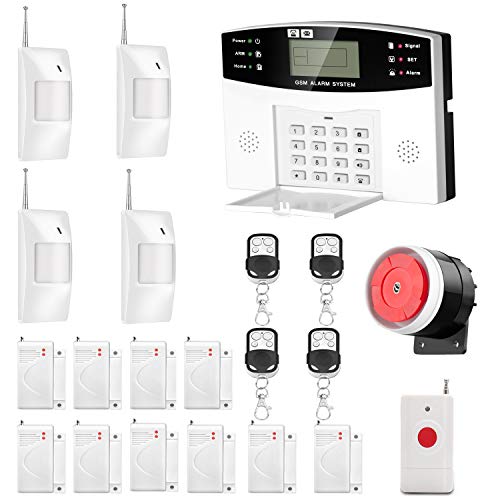
AGSHOME Security Alarm System 99+7 Zone Auto Dial 3/4G GSM SMS Home Burglar Security Wireless GSM Alarm System Detector Sensor Kit Remote Control
$99.99Check Price →For buyers who want the most for their money without sacrificing the features that actually matter, AGSHOME Security Alarm System 99+7 Zone Auto Dial 3/4G GSM SMS Home Burglar Security Wireless GSM Alarm System Detector Sensor Kit Remote Control is the practical choice at this price point.
Main Points
- Match kit size to coverage, not price. Count exterior doors, likely blind spots (side doors, driveways) and high-value zones (porch for packages). Big homes benefit from 14–24 piece kits (PGST, larger Ring sets), while apartments often do fine with 4–15 cheap door/window sensors (UltraPro, tolviviov). Make the main entrance and porch your priority.
- Think connectivity first: Wi‑Fi-only systems are cheap and easy but can drop when the network flutters. Systems with a dedicated hub and optional GSM/cellular backup (some GSM/Tuya-capable kits) are more resilient — worth it if you need reliability or professional monitoring. Renters can accept Wi‑Fi-only if you want easy setup and no drilling.
- Motion accuracy and night performance reduce false alarms and give usable evidence. Avoid simple PIRs aimed at busy sidewalks or pet paths; pick sensors with adjustable sensitivity or pet-immunity if you have animals. For cameras, prioritize good IR/night vision and adjustable detection zones — you want a clear porch shot for package-theft evidence, not grainy blobs.
- App quality and storage model determine long-term value. No-monthly-fee kits (some tolviviov models) are great if you want local alerts and on-device storage, but expect limited cloud features. Cloud subscriptions (Ring, some Tuya/Smart Life integrations) add convenience and remote video history — decide if that monthly cost is worth keeping 24/7 evidence and professional monitoring options.
- Price-to-value: spend where evidence matters, economize elsewhere. Use inexpensive door/window alarms on internal doors or as tamper sensors, and invest in a reliable hub, a quality porch camera, and a good app experience for primary coverage. Pro tip: during installation, mount door/window contacts within the manufacturer’s gap spec (usually 2–6 mm), label sensors in the app, and run a walk-test at night to adjust motion sensitivity and camera angles — you’ll catch blind spots before they become a problem.
Ring Alarm 8-Piece Kit (newest model), Home or business security system with optional 24/7 professional monitoring
The Ring Alarm 8-Piece Kit (newest model) earns the "Best Compact Starter Kit" spot because it gives you the right hardware without clutter or a steep learning curve. For $249.99 you get a base station, keypad, contact sensors, motion detector and range extender — enough to cover common entry points and a small blind spot without overbuying. It's compact, expandable, and backed by Ring's ecosystem so you can add a doorbell camera later for video verification.
What you get in practical terms: fast app-driven setup, clear arm/disarm modes, and integration with Ring cameras and doorbells so alarms can be tied to video clips. Motion detection is competent but not magical — placement matters more than sensitivity sliders. Optional 24/7 professional monitoring is available if you want responders, otherwise you can self-monitor through the app. Pro tip: angle motion sensors slightly downward and away from heat sources to cut false triggers from pets and sunlight.
Who should buy this? If you want solid, non-invasive protection that you can install yourself in an afternoon, this is for you. Renters benefit from adhesive sensors and a removable kit; homeowners get a low-cost hub they can expand into a full system. The price-to-value is honest — $249.99 buys dependable basics and easy scaling, but expect to pay extra for cloud video storage or professional monitoring if you want those features.
Drawbacks: Ring leans on cloud services for camera clips and some features, and some of the included sensors feel budget-grade compared with higher-end pro gear. You may need to tune zones and notifications to avoid false alarm fatigue. If you need enterprise-grade encryption, local video storage, or broad third-party automation compatibility out of the box, look elsewhere.
✅ Pros
- Compact, complete 8-piece starter set
- Simple app setup, no IT degree
- Pro tip: mount base station centrally
❌ Cons
- Cloud video needs subscription for storage
- Limited third-party smart home integrations
Ring Alarm 14-Piece Kit (newest model), Wireless smart home or business security system, expandable, easy setup, Mobile App Control, 24/7 Professional Monitoring, Alexa Compatible
Ring’s 14-piece Alarm kit earns the "Best Whole-Home Coverage" label because it gives you immediate, sensible coverage for the parts of a house that matter: a base station and keypad, multiple contact sensors for doors and windows, a motion detector, and a range extender so signals reach across a typical two-story home. Out of the box you can protect front and back entries, a garage door, and a main living area without running wires or calling a pro. That breadth — combined with easy expansion into Ring cameras and doorbells — is what makes it the right pick when you want coverage, not just a single camera.
Key features you’ll notice quickly: true DIY wireless setup, app-first control, and optional 24/7 professional monitoring. In the real world that translates to getting an alert when the side door opens (the common blind spot), arming the system from your phone when you’re at work, and linking a Ring Video Doorbell so you can visually verify a porch package theft before calling authorities. The motion sensor is competent for alarm use — aim and height matter — and the range extender fixes the dead zones that often break cheaper kits. Pro tip: mount motion sensors about 7–8 feet high and angle them down to avoid pets and small motion near the floor.
Who should buy this: homeowners who want a solid, expandable whole-house starter without service calls, and renters who need a non-invasive, removable solution. At $329.99 you’re getting a lot of coverage for the price — better value than buying sensors and cameras one at a time. If your priority is verified alerts (less false alarm fatigue), tie the alarm to a Ring doorbell or camera so you can see a delivery thief on your porch before you escalate. If you’re a renter, peel-and-stick contacts and a wireless base station make this one of the few systems you can reasonably take with you.
Honest caveats: Ring is cloud‑centric — many useful features and video history require a subscription, and Amazon ownership comes with privacy trade-offs you should accept or avoid. The kit lacks built-in professional-grade cellular backup and some commercial features that cost more. For small apartments or very tight budgets, a cheaper contact-sensor pack might be enough. Pro tip: test sensor communication and the app’s alert flow monthly to catch flaky batteries or network drops before you need them.
✅ Pros
- Covers most entry points out of box
- Quick DIY setup, no drilling required
- Plays well with Ring cameras and Alexa
❌ Cons
- Key features need subscription
- Cloud-first model raises privacy questions
Pro tip: Use the app’s verification delay and linked camera clips to reduce false police dispatches and false-alarm fatigue.
Wireless, battery-powered DIY alarmWiFi Door Alarm System, Wireless DIY Smart Home Security System, with Phone APP Alert, 8 Pieces-Kit (Alarm Siren, Door Window Sensor, Remote), Work with Alexa, for House, Apartment, by tolviviov
This kit earns "Best for Doors & Windows" because it focuses on what matters at the perimeter: reliable contact sensors, a loud siren, and a usable remote — and it does that for under sixty bucks. You don't get a camera or motion sensor here, but you do get inexpensive, battery-powered sensors that alert you the instant a door or window opens. For plain perimeter protection — front door, back door, side entry, basement window — this is efficient and direct.
Key features are simple and practical: an 8-piece wireless kit (siren, door/window sensors, remote), phone-app push alerts, and Alexa compatibility. In real use that means you'll get an immediate alert if someone opens your front door, and a siren that can scare off opportunistic package thieves on the porch — provided you arm it. The system's wireless, adhesive mounting makes it renter-friendly. It also keeps things simple so you won't need an IT degree to set it up.
You should buy this if you need affordable perimeter detection or a quick way to cover multiple entry points without drilling or wiring. Homeowners can use it as a basic first line of defense; renters can stick sensors to frames and move them later. It’s not a replacement for cameras or professional monitoring, but it’s a solid, low-cost layer that reduces blind spots like a side-door you can't see from the street. Pro tip: mount the two sensor halves within 1/2 inch and clean the surface before applying adhesive to avoid false triggers.
Honest caveats: there's no video, no professional monitoring option, and the app is serviceable rather than feature-rich. You may get false-alarm fatigue if sensors are misaligned or installed on a vibrating gate. Also expect periodic battery swaps and occasional Wi‑Fi dropouts; this is budget perimeter alarm gear, not enterprise hardware.
✅ Pros
- Low cost for eight-piece kit
- Works with Alexa and phone alerts
- Easy adhesive, no drilling install
❌ Cons
- No camera or video capability
- App lacks advanced automation options
Pro tip: run a full walk-test after install — open each entry slowly to confirm alerts and siren volume.
Wireless door/window contact sensors + sirenPro tip: treat this as perimeter detection only — pair with a doorbell camera for porch/package coverage.
PGST WiFi Home Alarm Security System,Wireless DIY Smart Home Burglar Security Alarm System 24 Pieces Kits, Compatible with Alexa Google Home Voice Control for Villa Home Apartment
This PGST kit earns "Best for Large Homes" because it gives you coverage, not just a single sensor. You get 24 wireless pieces — enough door/window contacts, PIR motion sensors, remotes, a siren and a central Wi‑Fi hub to blanket a multi‑entry house or a villa without running wires. For large footprints that have multiple external doors, a detached garage or a back patio blind spot, the quantity and wireless range are the selling points. Pro tip: mount the hub near the center of the home and on a shelf off the floor to maximize RF reach and Wi‑Fi reliability.
Hardware is simple by design. Door/window contacts trip instantly when opened. PIR motion sensors are thermal and work in darkness, so they catch an intruder moving through a hallway at night. The siren and keypad give on‑site deterrence; the mobile app plus Alexa/Google control lets you arm/disarm remotely. In real terms: you can cover every entrance to stop a side‑door blind spot from being an easy entry, and motion sensors near the front walk will at least alert you to a package thief at the porch (you’ll need a camera to get video). Setup is DIY — adhesive or screws — so renters and homeowners both have options.
Buy this if you have a larger house and want lots of contact points without a professional install. It’s a good budget choice when you need many sensors for interior and exterior entry zones but don’t require integrated cameras or paid professional monitoring. At about $133 for 24 pieces, the price-to-value is strong: you get breadth rather than premium cloud extras. If you’re a renter, use command strips and avoid drilling; if you own, hard‑mount the sensors for long‑term reliability.
There are caveats. The app is functional, not fancy — expect a basic interface and occasional lag. This is an alarm kit, not a camera system: no video, no continuous footage, and limited local logging. In very large multi‑story homes you may need wireless repeaters or additional hubs if signals weaken. Overall: excellent coverage for the money, but plan for supplemental cameras or monitoring if you want verified video alerts.
✅ Pros
- 24-piece kit provides wide door/window coverage
- Very affordable for full-house installs
- Pro tip: place hub centrally for best range
❌ Cons
- Basic app with occasional lag
- No cameras or built‑in video recording
UltraPro Personal Security Window and Door Alarm, 4 Pack, DIY Protection, Burglar Alert, Wireless Chime/Alarm, Easy Installation, Home Security, Ideal for Home, Garage, Apartment and More, 45174
You earn the "Best for Quick DIY" tag with speed and simplicity, not bells and whistles. This four-pack of UltraPro contact alarms gives you instant audible protection for doors, windows, garages, or an apartment entry without an app, hub, or drilling. For $25 you get tool-free installation and a loud chime/alarm that deters opportunists — ideal when you need basic coverage fast. Pro tip: clean the mounting surface with isopropyl alcohol, press for 30 seconds, and let the adhesive set overnight for a reliable bond.
What you get are magnetic reed contact sensors paired to small wireless units that act as a door/window chime or full alarm. Real-world benefit: put one on a side door or basement window that your cameras miss, and you'll get immediate local notification when a point of entry opens. They work well to stop package-grabbers who slip through an unlocked side gate and into a back door, and they’re quiet in chime mode so you avoid false alarm fatigue. Don’t expect night-vision, app push alerts, or cloud logs — this is a local, audible layer, not a remote monitoring system.
Buy this if you want fast, inexpensive protection: renters who can’t drill, homeowners who need a temporary fix, or anyone layering basic sensors under an existing camera system. Use them on secondary entries, sheds, or interior doors where a loud local alarm is enough to interrupt a theft in progress. If you need smartphone alerts, event history, or professional monitoring, budget for a smart system instead. Pro tip: pair one of these with an inexpensive Wi‑Fi camera aimed at the same entry — alarm sounds, camera records.
Honest drawbacks: there’s no smartphone integration, no cloud storage, and no smart-home automations — so you won’t get remote alerts or recorded timelines. Adhesive mounts are great for renters but can degrade outdoors or on rough surfaces; screws would be more permanent. Battery life is fine for basic use but not specified to the minute, so check periodically. Price-to-value is excellent for quick coverage, but don’t treat this as a replacement for a monitored system when you need remote awareness.
✅ Pros
- Very low cost per sensor
- Tool-free adhesive installation
- Loud local alarm or chime
❌ Cons
- No smartphone alerts or remote monitoring
- Adhesive mounting can fail outdoors
Pro tip: install indoors or under eaves to protect the adhesive and reduce tamper risk.
affordable magnetic contact sensorsWiFi Wireless Alarm System for Home Security, GSM Home Alarm 24 Piece Kit with Siren, PIR Motion Sensors, Remote Controls, Window/Door Sensors (Tuya and Smart Life APP)
This kit earns the "Best for Smart Home Integration" slot because it speaks Tuya and Smart Life natively. That means you can fold the alarm into the same app and voice routines you already use for lights, plugs, cameras and locks. The hub supports Wi‑Fi plus GSM backup for SMS alerts if your internet dies, and the kit ships with a siren, PIR motion detectors, remotes and door/window sensors — a full perimeter package at a budget price ($132.98).
Key features are practical and straightforward: plug‑and‑play pairing in the Smart Life app, motion sensors that trigger scenes (turn on porch lights or start a camera recording), and a loud wired siren for on‑site deterrence. In a real scenario — a package theft on your front porch — the motion sensor can start light and camera automations while the hub pushes an alert to your phone and sends an SMS if Wi‑Fi is out. For a side‑door blind spot, the PIRs let you cover approaches without running wires. App control makes daily arming simple, and the GSM path reduces single‑point failures. Pro tip: place the hub centrally, 1–2 meters off the floor, to maximize wireless range and reduce dead spots.
Who should buy this? You, if you want a full sensor kit that integrates with other Tuya/Smart Life gear and you don't want to manage separate vendor apps. It's ideal for renters who need adhesive mounts and non‑invasive installs, and for homeowners who want automations linking alarms to lights, cameras and smart locks. It's also a good value if you want redundancy (Wi‑Fi + GSM) without paying for monthly professional monitoring. If you need advanced camera analytics or guaranteed low‑latency professional monitoring, look at higher‑end systems instead.
Be honest: the app and notifications are occasionally sluggish compared with premium brands, and the kit doesn't include a camera or local video storage — you'll need Tuya‑compatible cameras (and possibly cloud subscriptions) for video evidence and night‑vision. Sensors are competent but not rock‑solid against bad placement; false alarm fatigue is real unless you tune sensitivity and entry/exit delays. Price‑to‑value is strong, but expect a few compromises in polish and latency. Pro tip: test your GSM backup and push alerts at least once a month after installation.
✅ Pros
- Strong Tuya/Smart Life integration
- GSM backup when Wi‑Fi fails
- Pro tip: hub 1–2m off floor
❌ Cons
- Inconsistent app notifications sometimes
- No built‑in camera or local storage
Factors to Consider
Coverage and camera placement — don't leave blind spots
Decide what you need to watch: front porch for package theft, driveway, and a side door that tends to be a blind spot. Camera specs matter — aim for at least 1080p (better if 2K), 110–140° field of view for entry points, and true IR or color night vision for low-light identification. Consider wired cameras for always-on reliability at primary entrances and battery cameras for secondary spots or rentals. Pro tip: mount motion cameras 7–9 feet high, angled slightly down to reduce false triggers and capture faces, and test coverage at night before finalizing placement.
Motion detection accuracy and sensor choice
Cheap motion triggers are noisy and cause alarm fatigue; look for PIR sensors with adjustable sensitivity or dual‑tech sensors (PIR + microwave) to cut false positives. For glass-break, use acoustic sensors placed where windows are most vulnerable; for doors use contact sensors and consider smart locks that report forced entry. Pet‑immune PIRs or placement above typical pet height prevents chasing alerts. Pro tip: run motion detection on detection zones and schedules (away vs home) in the app to stop alerts from your porch light or passing cars.
Monitoring options: self-monitoring vs professional monitoring
Self-monitoring keeps costs low and gives instant app alerts, but you must call authorities yourself; professional monitoring includes dispatch but adds monthly fees and potential false-alarm charges. If you want the police to be contacted automatically, choose a verified alarm company with a local monitoring center and clear contract terms — avoid long lock-in unless the price justifies it. Renters often do fine with self-monitoring and camera notifications; homeowners with high-value assets may prefer professional backup. Pro tip: if you choose professional monitoring, confirm the company supports police staffing in your municipality to avoid dispatch delays or rejection.
Storage and privacy — local vs cloud trade-offs
Cloud storage is convenient for off-site backup and easy sharing but usually requires a recurring subscription and raises privacy questions; local storage (microSD, NVR, or NAS) gives you control and no monthly fee but needs setup and backups. Look for cameras that support both — local recording for continuous capture, cloud clips for easy evidence sharing. Also check encryption standards and whether the vendor provides exportable video files for legal use. Pro tip: use local recording for critical cameras (driveway/door) and a low-cost cloud plan for event clips you may need on the go.
Installation, integration, and budget — match tech to skill level
Ease of setup matters. If you want no‑drill, choose battery wireless systems with adhesive mounts and Zigbee/Z‑Wave/Thread integration for smart locks and sensors; if you own the house and want reliability, hardwired PoE cameras and a wired alarm panel are superior. App quality, firmware updates, and standards like RTSP/OpenAPI determine long-term usefulness — a polished app beats a feature-stuffed one you never use. Pro tip: balance price-to-value — cheap cameras work for low-risk spots, but spend on a reliable doorbell or main entrance camera and put cheaper backups on secondary angles.
Frequently Asked Questions
How many cameras do I actually need for decent coverage?
Most homes get solid baseline coverage with a video doorbell and two exterior cameras (front and rear or driveway). Add a side-door camera for blind spots and one for a backyard if you store equipment there. Prioritize entrances and high-value asset views over blanket coverage.
Can I rely on battery cameras or should I go wired?
Battery cameras are excellent for renters and hard-to-wire spots; modern models last months and are easy to reposition. For primary entrances and always-on recording, wired (PoE or mains) cameras offer better reliability, no battery maintenance, and continuous recording. Use a mix: wired for main access points, battery for secondary angles.
Should I pay for cloud storage or keep video locally?
Cloud storage is convenient for off-site access and automatic retention but costs monthly and can lock you in. Local storage on microSD, NVR, or NAS gives you control and no recurring fees, but you must manage backups and potential theft of the recorder. If privacy and long-term cost matter, prioritize local recording with optional cloud for quick sharing.
How do I reduce false alarms without losing detection?
Use adjustable sensitivity, detection zones, and scheduling in the app to ignore predictable motion (street traffic, swaying trees). Choose pet-friendly PIR sensors and mount them at recommended heights and angles away from heat sources. If monitored professionally, enable a short verification delay or video verification to avoid unnecessary dispatches.
Will my system keep working if the internet goes down?
It depends: wired local recording systems (NVR/NAS) will keep recording without internet, but cloud-only devices may lose remote access and off-site backups. Many hybrid systems continue to record locally and queue uploads when the connection returns. Consider a battery backup for your router or a cellular backup option if uptime is critical.
Can I install a full alarm system in a rental?
Yes — choose wireless, non-destructive components like adhesive-door/window sensors, battery motion sensors, and plug-in cameras to avoid drilling. Smart locks that don't require rekeying or that use temporary codes are renter-friendly. Always check your lease and get landlord approval for any permanent wiring or external camera placement.
Is professional monitoring worth the monthly fee?
Professional monitoring is worth it if you want guaranteed dispatch and can't respond quickly to alerts, or if you have high-value items and want 24/7 oversight. For many homeowners who check alerts and live nearby, self-monitoring with optional emergency contacts is a cost-effective choice. Weigh local false-dispatch fees and contract terms before committing.
Conclusion
Choose a system that matches your home's risk profile: start with a reliable video doorbell and a couple of well-placed cameras, add door/window sensors, and decide between self-monitoring or paid backup based on how quickly you can respond. Spend on quality where it matters (main entrances, app reliability, night vision) and use cheaper cameras for secondary viewpoints — that combination protects you without overcomplicating setup or bills.


